
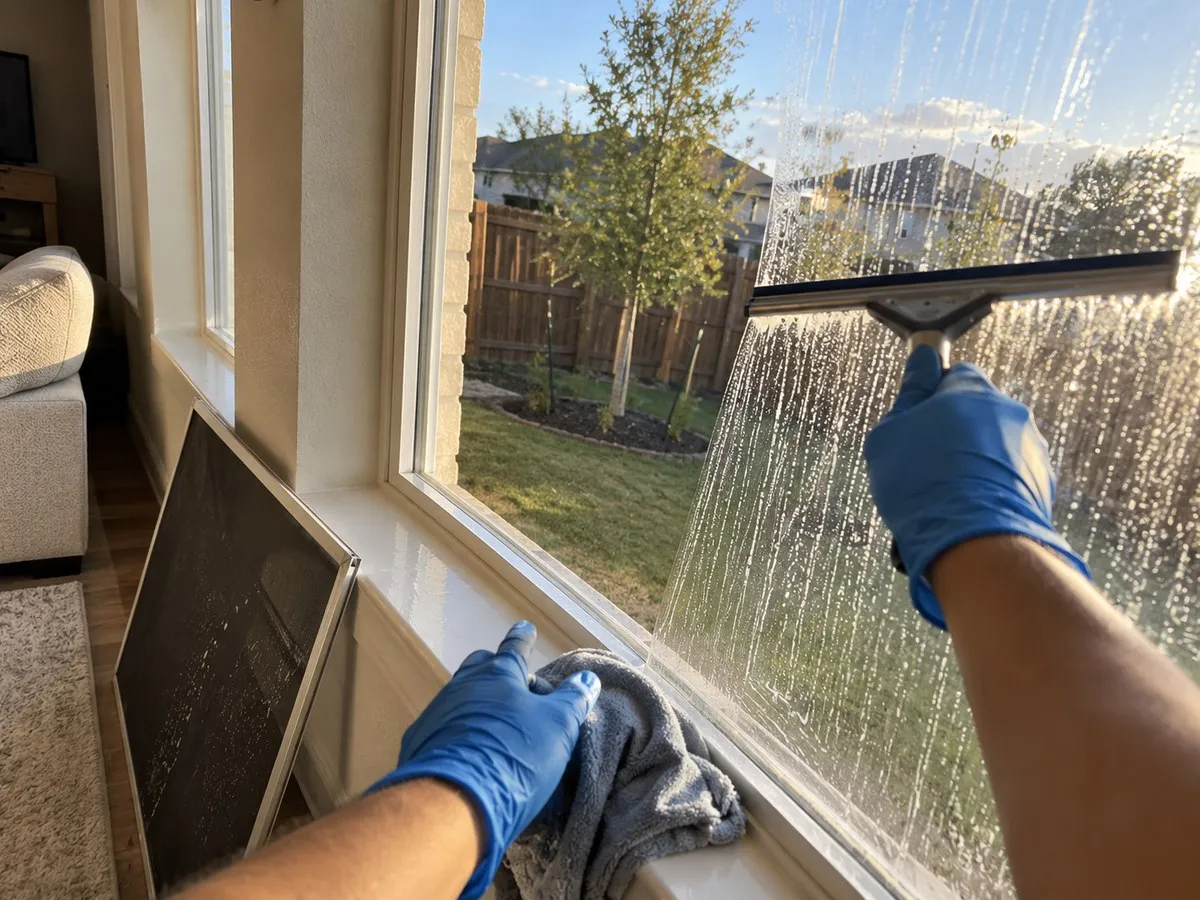
Interior & Exterior Window Cleaning in Frisco That Fits Your Home's Routine
What Interior & Exterior Window Cleaning Includes
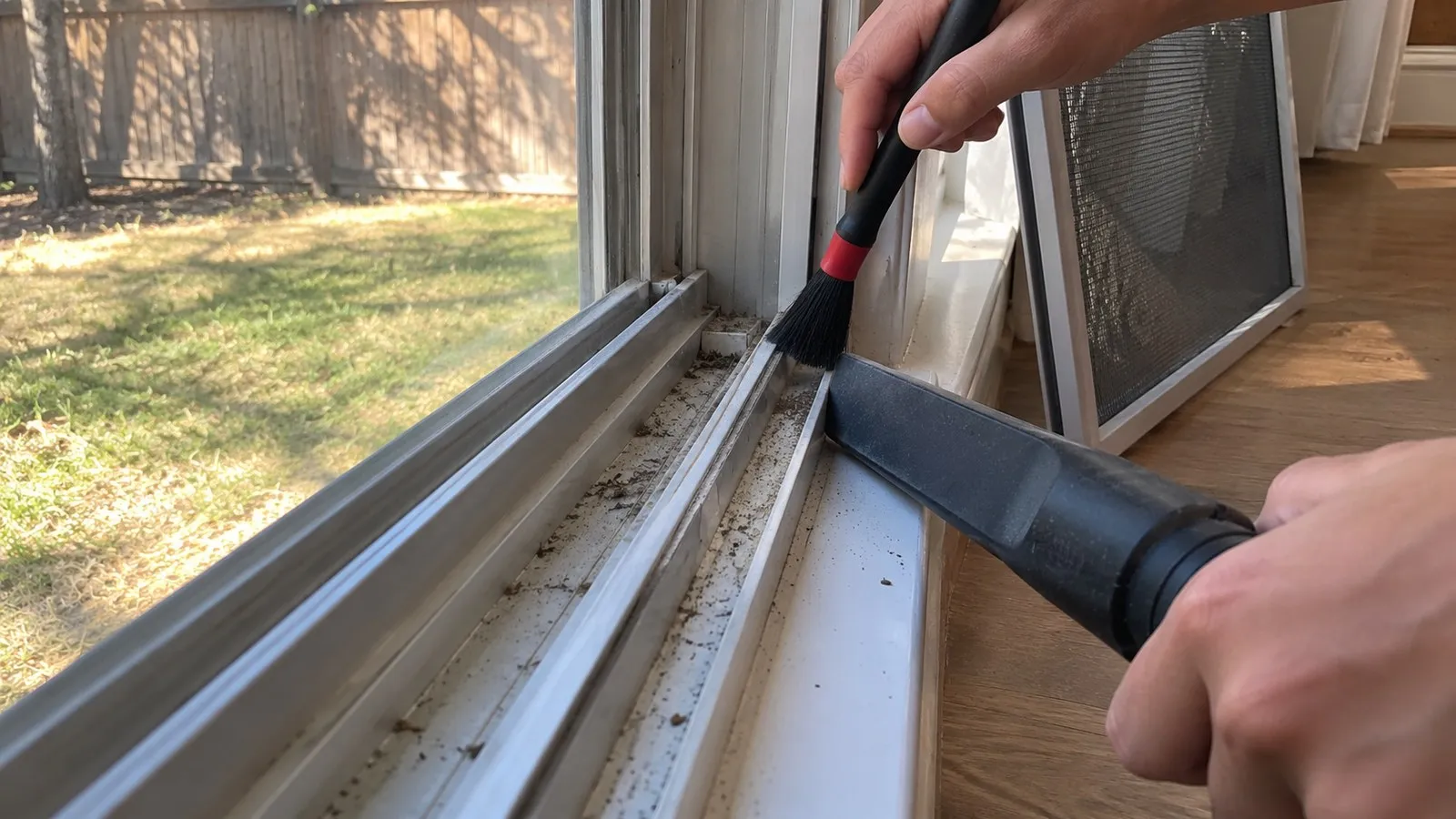
A full interior and exterior window cleaning covers more than the glass. It means both sides of each pane, plus the frames, sills, and tracks where dust and dead bugs collect. Screens and hard water spots are the two things worth talking about before your visit.
Most people picture a squeegee on the glass and call it done. But a window that looks clean from the street can still have a gritty track, a dusty sill, and a screen that's gray with pollen. Clean glass behind a dirty screen still looks dull. A real job like this looks at the whole window, not just the pane.
Here's what a complete window cleaning covers:
- Glass on both sides. Inside, that means fingerprints, nose prints from kids and pets, and the hazy film that builds up near kitchens. Outside, it's dust, pollen, rain spots, and bird mess.
- Frames and sills. These catch dust indoors and dirt outdoors, and they're often the first thing you notice once the glass is clear.
- Tracks. Sliding windows and patio doors trap grit, dead bugs, and leaves in the track. Left alone, that gunk makes them hard to open.
- Screens. A screen holds a surprising amount of dust and pollen. Cleaning the glass without touching the screen leaves you with a view that still looks foggy.
Lawn sprinklers are a big deal for Frisco windows. If your system sprays the lower windows, the water dries on the glass and leaves white mineral spots. Fresh spots usually come off with the right cleaner. Spots that sit for months can bond to the glass or even etch it. When that happens, cleaning makes them a lot lighter, but it may not make them disappear. We'd rather tell you that up front than have you surprised after the visit. Adjusting a sprinkler head so it stops hitting the glass will do more to keep those windows clear than any cleaning can.
Newer homes have their own issue. Frisco has a lot of recent construction, and builders often leave dust, paint specks, sticker glue, and caulk smears on glass and sills. That residue needs more care than everyday dirt, so mention it if your home is new.
Our team brings its own supplies. We use eco-friendly, pet-safe, non-toxic products, which matters on sills where pets nap and kids press their hands against the glass. You don't need to be home during service.
To get an accurate picture of the job, tell us these things when you reach out:
- About how many windows you have, and whether any are second-story or above
- Whether you want the screens done
- Any hard water spots you've noticed, and where they are
- Leftover construction residue if your home is new
- Sliding doors or other large glass you'd like included
Those details tell us how much time your windows will take, so there's no guessing about what's included once we arrive.
Window Cleaning After New Construction and Move-In
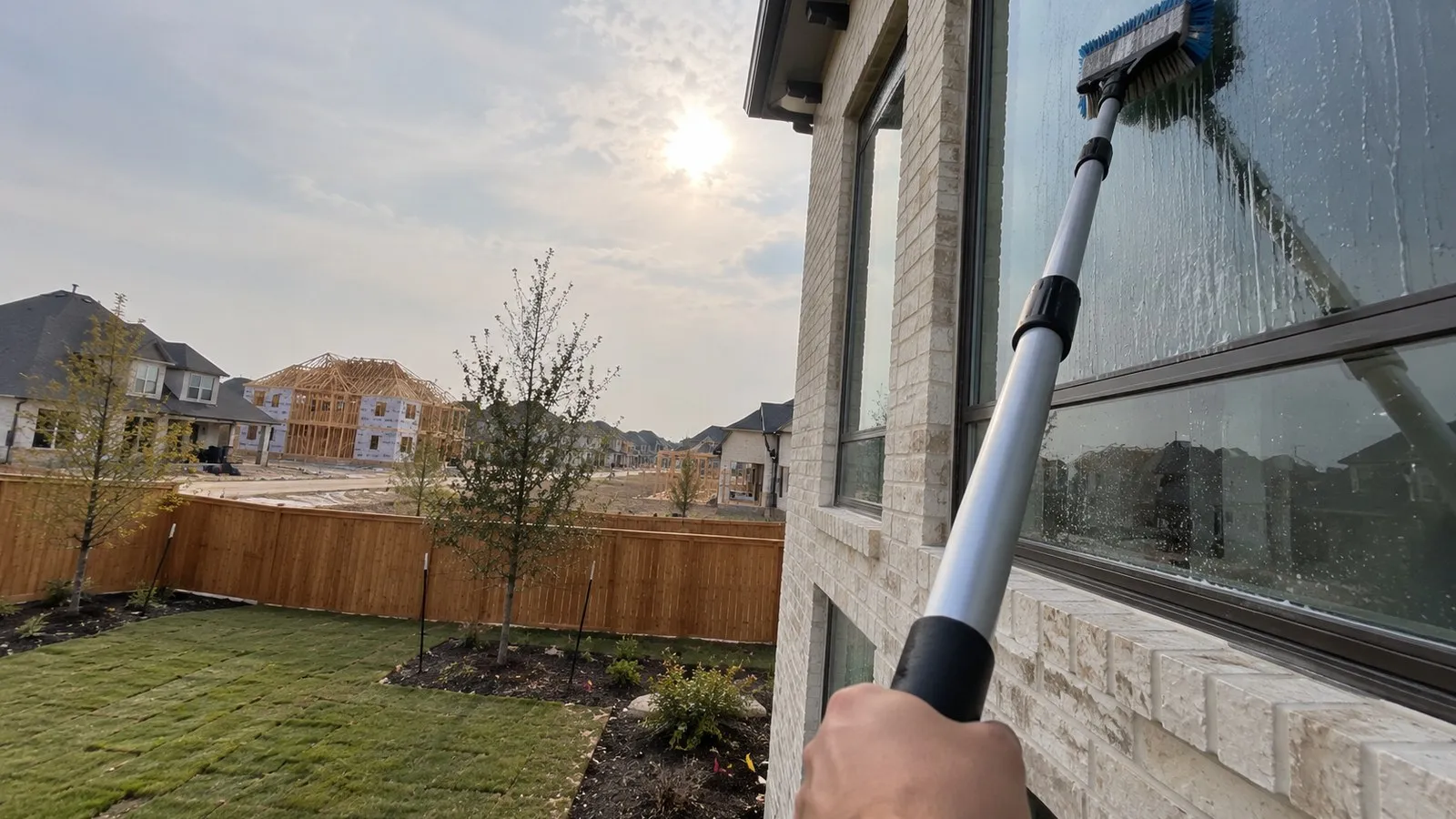
Timing is the biggest question with new-home windows. The best time to clean them is after the dusty work is done and before your boxes and furniture show up. Book too early and you'll pay for windows that get dirty again. Book too late and you'll be working around couches, beds, and stacks of boxes to reach the glass.
On a new build, the house isn't finished just because you have the keys. Many things kick up dust after closing, and that dust lands on fresh glass and sills:
- Sod, landscaping, and new flower beds
- Fence installation
- Punch-list repairs, touch-up paint, and drywall patches
- Blinds or shutters being installed
- Work on the lots next door, if your street is still building out
If most of that work is behind you, it's a good time to book. If a fence crew is coming next week, wait until they're done.
Builder residue is also a different job from everyday dirt. The paint specks, sticker glue, and caulk smears we mentioned earlier don't wipe off like dust and pollen. Construction grit is often still on the glass, too. That's why new-build windows take more time than routine windows. Scrubbing hard on dirty glass can drag grit across the surface and scratch it. When you reach out, tell us your home is new so we can plan enough time to do the job right.
An empty house makes everything easier. Our move-in and move-out cleanings are best done while the home is empty so we can get to every surface, and windows are a big part of that. With no furniture in the way, we can reach every sill, every track, and every corner of the glass. Once a dresser is pushed under a window or a sectional sits in front of the patio door, those spots tend to get skipped for months.
A resale home has different problems. You're not dealing with caulk and stickers. You're dealing with whatever the last owners left behind. That can mean hand smudges at kid height, pet nose prints on the patio door, and tracks packed with years of dirt, dead bugs, and leaves. If a lawn sprinkler hit the lower windows for a few summers, you may also have the hard water spots covered above. Old, set-in spots will look a lot better after cleaning, but some may not come out all the way. It's better to know that before you move in than to find out afterward.
Here's an honest caveat. Some builders do a final clean before closing. If your glass already looks clear, the sills are wiped, and the tracks are empty, you may not need a full post-construction job. A lighter clean later on, after the landscaping settles, may be all you need. Walk around the house and look at the windows in daylight before you decide.
If you're cleaning the whole house before moving in, you can book the windows with a full move-in cleaning. That way the glass, floors, kitchen, and bathrooms are all done in one visit while the rooms are still empty.
Adding Window Cleaning to a Recurring Cleaning Schedule
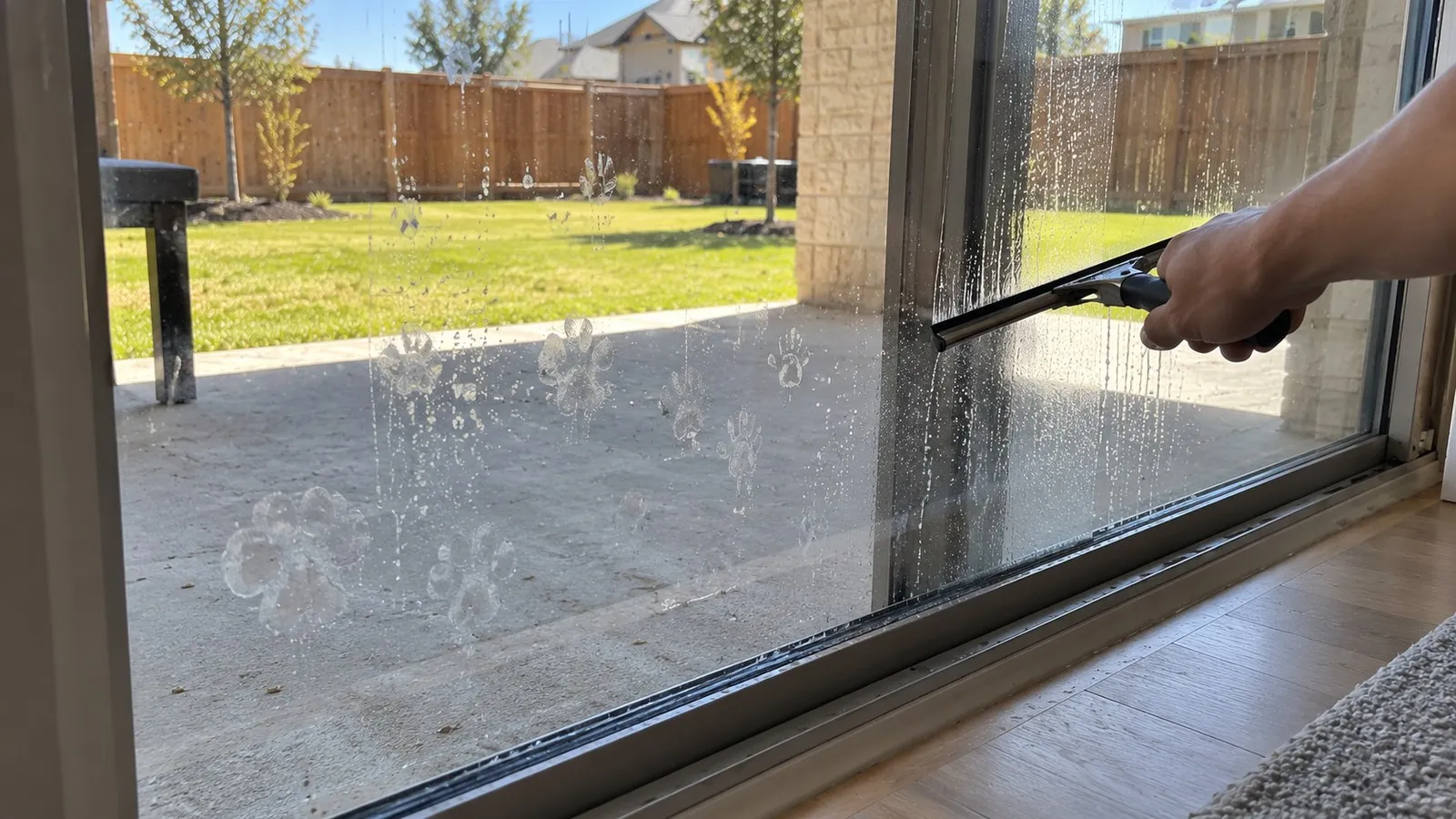
Your windows don't need the same schedule as your kitchen and bathrooms. Floors and counters get dirty every day. Glass gets dirty slowly, and some of it gets dirty fast. The smart move is to match the window work to how your home gets used, not to clean every pane every visit.
Think about it in two parts.
- High-touch glass. The patio door, the front door glass, and the low windows where kids and pets hang out. These pick up handprints and nose prints all week. They're the ones that make a clean house still look a little off.
- Everything else. Upstairs windows, side windows, and glass nobody touches. Dust and pollen build up slowly here. A full inside and outside clean every so often is usually plenty.
Most homes don't need a full window job on a weekly or every-other-week rhythm. That would be paying for clean glass that's already clean. A couple of full window cleanings a year, with the busy glass handled more often, is a sensible place to start. Then you adjust based on what you see.
Some homes need more. If you have pets that press against the patio door, you'll notice smudges within days. If a sprinkler still hits the lower windows, those spots build up between visits, and fixing the sprinkler head does more than any schedule. If your street is still building out, construction dust from the lots next door will keep landing on your glass until the work wraps up. In those cases, more frequent window care makes sense.
Here's the honest part. If your windows face a quiet side of the house and you rarely open the blinds, you may not need window cleaning on your recurring plan at all. A full clean once or twice a year could be all it takes. We'd rather you spend on what you'll notice.
Our recurring house cleaning is already set up around your home. Newer builds often do well with every-other-week visits. Larger homes and homes with pets usually go weekly. Window work can fit around that same idea. Tell us which glass bugs you most, and we'll talk through how to work it in.
Trying it out carries no risk. We don't use contracts. You can change or cancel your service any time with no penalty. If you add windows and decide later you want them done less often, just tell us. Our pricing is flat and quoted before we arrive. There's no hourly billing, no trip fee, and no hidden charges. You don't need to be home, so a recurring visit with window work can happen while you're at work.
When you reach out, mention your current cleaning schedule, any pets, and which windows get the most smudges. That's enough to figure out a plan that keeps the glass clear without paying for work you don't need.
How Window Cleaning Pricing Works
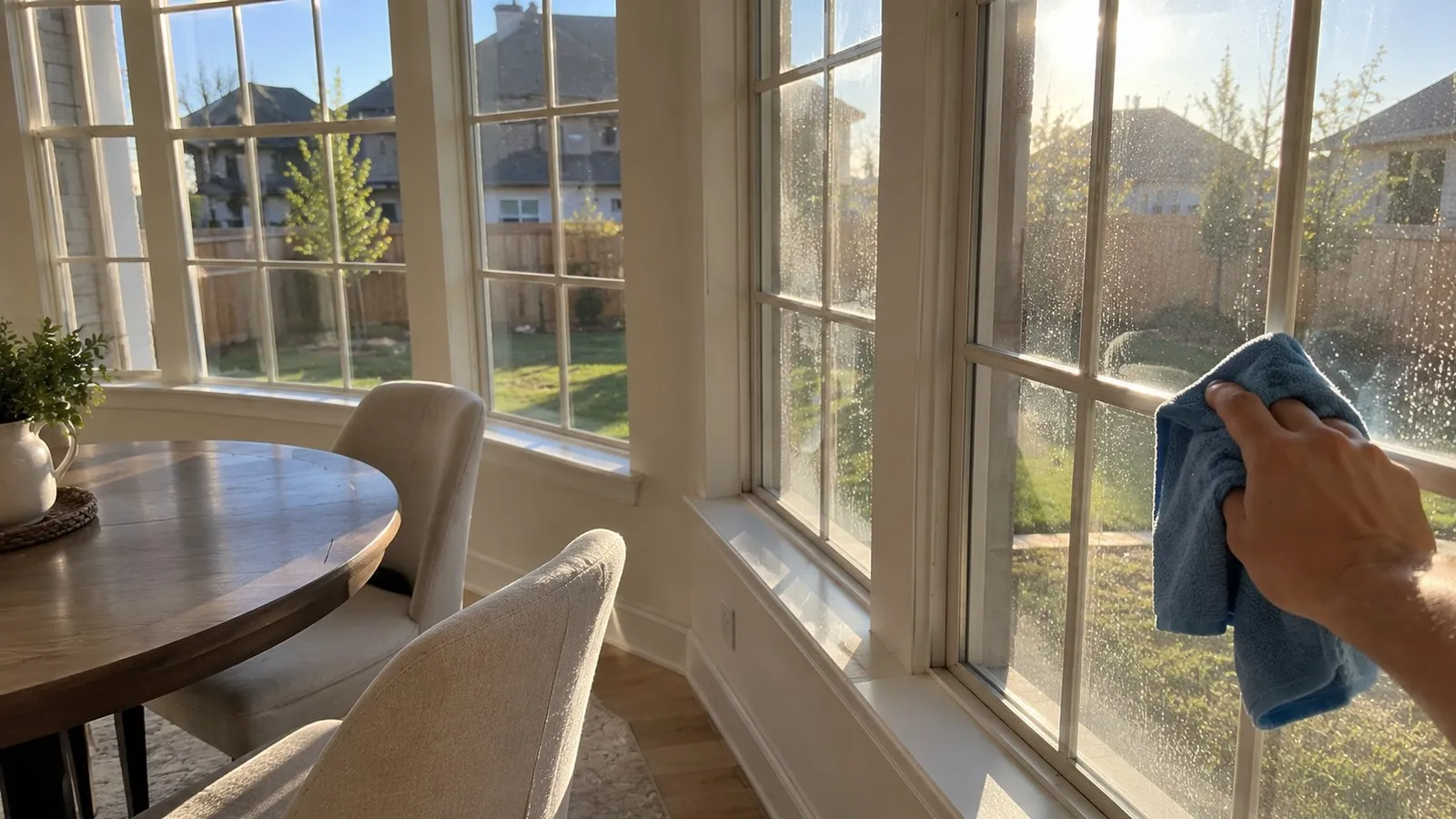
Window cleaning prices aren't set the same way by every company. The number you get depends on how the job is counted and what's included. Once you know how the counting works, you can compare quotes fairly and spot the one that leaves out half the job.
Here are the most common ways window cleaning gets priced:
- Per pane. Every separate piece of glass counts. This can add up fast on windows with grids or divided panes, where one window might count as several.
- Per window. Each window opening is one unit, no matter how many panes it has. This is simpler, but ask how they count a big picture window or a sliding door.
- By home size. Some companies quote one price based on the size of the house and the number of windows. You know the total before the work starts.
- By the hour. The bill depends on how long the job takes. It can be fair on a small job, but it's hard to know your final cost ahead of time.
The way a job is counted matters less than what goes into it. These are the things that push the cost up or down:
- How many windows you have. More glass means more time.
- Inside, outside, or both. Doing both sides takes about twice the work of doing one.
- Height. Second-story and higher glass takes more time and care than windows you can reach from the ground.
- Screens and tracks. Some quotes cover only the glass. Adding screens, sills, and tracks adds time.
- Hard water spots. Old sprinkler spots take extra work, and some may only get lighter, as we covered above.
- Construction residue. Paint specks, sticker glue, and caulk on new-build glass take longer than dust and pollen.
- Access. Furniture in front of windows, tall shrubs along the outside wall, or blinds that need to come up all slow things down.
Two quotes can look far apart and be close once you line up what each one covers. A low price that skips screens and tracks may leave your windows looking dull. A higher price that includes them may be the better deal.
Before you hire anyone, ask these questions:
- Is the price for inside, outside, or both?
- Are screens, sills, frames, and tracks included, or extra?
- How do you count a window with grids, a picture window, or a sliding door?
- Is there an extra charge for second-story glass?
- What happens if hard water spots don't come all the way off?
- Is the price fixed, or can it change once you're here?
That last question is the big one. With hourly billing, a slow job costs you more. With a fixed quote, the company takes on that risk. As we said earlier, our quotes are flat and given before we arrive, with no trip fee and no hidden charges. To get an accurate number, tell us how many windows you have, which ones are upstairs, whether you want screens and tracks done, and about any hard water spots or builder residue. The more you share up front, the less room there is for surprises.
Signs Your Windows Need Professional Cleaning Now
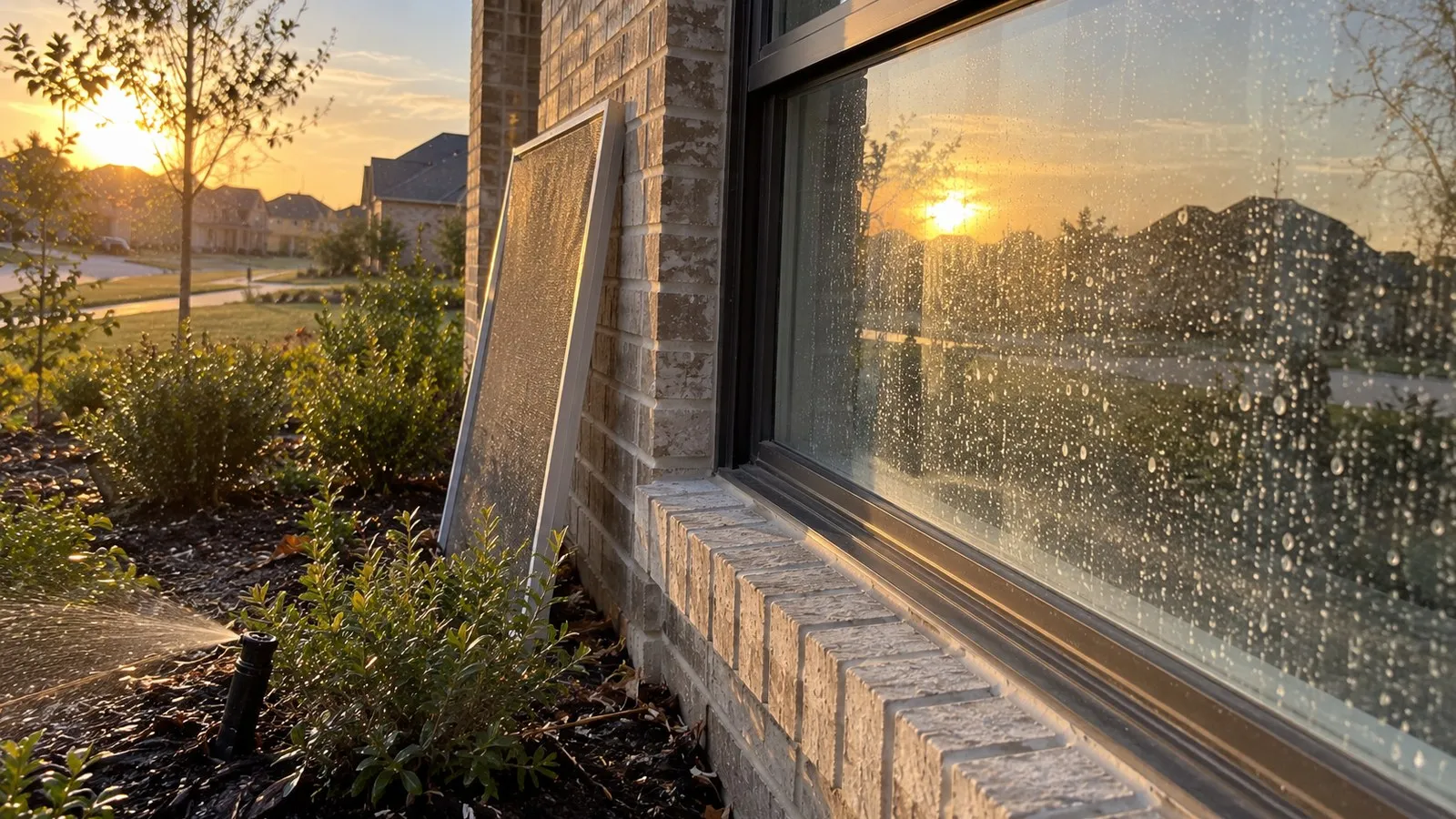
Most people don't notice dirty windows until something makes them look. Late-day sun hits the glass, and suddenly every streak and smudge shows up. That moment is a good test, and here are the signs that say it's time for a real clean.
- The view looks hazy when the sun hits it. If the glass looks foggy even after you wipe the inside, the outside is probably the problem. That's hard to fix from indoors.
- White spots on the lower windows keep growing. This is the one that won't wait. As we covered above, sprinkler spots get harder to remove the longer they sit. Cleaning them while they're fresh gives you the best shot at clear glass.
- Your sliding door or windows stick. Grit and dead bugs in the tracks make them drag. If you're tugging on the patio door, the tracks need cleaning.
- The screens look gray. Hold your hand behind a screen. If it looks dusty from a few feet away, clean glass behind it will still look dull.
- You can't reach some of the glass. Second-story windows and tall panes over the stairs often go years without a cleaning because nobody wants to climb up there. If getting to it means hauling out a tall ladder, that's a good reason to hand it off.
- You're about to move in, move out, or list the house. Clear glass makes empty rooms look brighter. It's also much easier to clean before furniture blocks the sills.
If you're seeing two or three of these at once, a full inside and outside clean will make a difference you'll notice right away.
Not every smudge needs a pro. If the only problem is handprints and nose prints on the patio door, a microfiber cloth and a glass cleaner will take care of it in five minutes. If you have a one-story home with a handful of windows you can reach from the ground, doing them yourself on a cool, cloudy morning is a fair choice. Direct sun dries the cleaner too fast and leaves streaks.
Sometimes the right call is to wait. If a fence crew, landscapers, or the builder next door is about to kick up dust, hold off until they're done. The same goes for new-build residue, as long as the punch-list work is still going. Cleaning before the dusty work ends means paying twice.
Here's the simple way to decide. If the problem is small and within reach, handle it yourself. If it's spreading, like spots on the glass, or it's out of reach, like upstairs windows, or it's piled up, like tracks and screens, that's when professional cleaning earns its cost.
Take a slow walk around your house this week, inside and out, in daylight. Note which windows bother you, which ones have spots, and which ones you can't reach. That short list is all we need to give you a flat quote.
Related services
- Deep clean
Deep Clean in Frisco: Know When You Need One
- Move-in cleaning
Move-in Cleaning in Frisco: Get Your New Home Ready Before You Unpack
- Recurring house cleaning
Recurring House Cleaning in Frisco: Pick the Right Schedule
- Upholstery cleaning
Upholstery Cleaning in Frisco: Know Your Quote Before You Book
- Mattress cleaning
Mattress Cleaning in Frisco That Targets Allergens, Odor, and Stains
Back to House cleaning service in FriscoBack to House Cleaning Services Pros of Frisco
Frequently Asked Questions
Common questions about Interior & exterior window cleaning
Is it really worth paying someone to clean your outside windows?
Yes, especially if you have second-story glass or hard water spots from sprinklers. Reaching upper windows safely takes the right equipment, and fresh sprinkler spots come off much easier than ones left to sit for months. If your home only has a few ground-level windows, you can likely handle those yourself on a cool, cloudy day.
What's the best way to handle both inside and outside glass in one visit?
The best approach treats inside and outside as two separate jobs on the same visit, since each side collects different grime. Inside glass picks up fingerprints and hazy film near kitchens, while outside glass collects pollen, rain spots, and bird mess. Doing both sides also means checking frames, sills, tracks, and screens, not just the pane itself.
Do I need to clean my screens every time I get my windows done?
Not every time, but a gray, dusty screen will make even perfectly clean glass look dull. Hold your hand behind the screen and step back a few feet; if it looks hazy, that screen is overdue. Mentioning screens when you book lets us plan enough time to handle them along with the glass.
Ready to Get Started?
Call (945) 777-3816 now for a free estimate.