
Office & Workplace Cleaning in Frisco: What to Check Before You Book
Office Cleaning vs. Janitorial Service: Know the Difference Before You Call
Office cleaning means a crew comes in on a set schedule to clean the surfaces your people touch and the rooms they use. Janitorial service is ongoing building upkeep. It often runs daily, includes restocking and heavy floor care, and comes with a long-term contract. If your space is a small suite with a few restrooms and a break room, you probably need office cleaning, not a janitor.
People use these two words like they mean the same thing. They don't. Knowing which one you need saves you from paying for work you'll never use. It also keeps you from hiring a crew that can't cover what your building really needs.
Office cleaning is scheduled cleaning of the space your team works in. A crew comes weekly, every other week, or a few times a week. They clean what gets dirty from people being there.
- Desks, counters, and other high-touch surfaces like door handles and light switches
- Break rooms and kitchenettes, including sinks, microwaves, and fridge fronts
- Restrooms, including toilets, sinks, mirrors, and fixtures
- Vacuuming, sweeping, and mopping
- Emptying trash and dusting
Janitorial service is bigger. It usually means someone handles the building every day or every night. That work can include restocking paper goods and soap, stripping and waxing hard floors, and keeping lobbies and common areas up during business hours. Janitorial firms often sign you to a monthly or yearly contract and bill a set monthly rate for the whole scope.
Here's a simple test. Picture your space after a normal week. Are crumbs in the break room, smudges on the glass, and a restroom that needs a real scrub the main problems? That's office cleaning. Do you have a large building, foot traffic all day, and supply closets someone has to keep stocked? That's a janitorial job.
We'll be straight with you about where we fit. We're a locally owned residential cleaning company serving Frisco and Collin County, and office and workplace cleaning is one of the services we offer. If you run a multi-floor building that needs a nightly crew, someone on site in the daytime, or floor stripping and waxing, a dedicated janitorial company is the better call. We'd rather tell you that now than have you find out three weeks in.
A smaller workplace is where we make sense. Think a professional suite, a small studio, or a shared office with a handful of desks and a restroom or two. Our cleaners are fully background-checked, which matters when they're in your space around files and equipment. We bring our own supplies, use eco-friendly and non-toxic products, and run HEPA-filtered equipment to pull dust and allergens out of carpet and off surfaces. There's no contract, so you can change or cancel any time without a penalty.
Before you hire anyone, ask these questions. Is the price per visit or a flat monthly contract? What exactly is on the checklist, and what costs extra? How long is the commitment, and what does it take to get out of it? The answers will tell you fast whether you're talking to an office cleaner or a janitorial outfit.
What a Standard Office Cleaning Visit Covers
A standard visit has one job. Your team should walk in the next morning to a space that looks and feels clean. You already know the basic areas. What matters is the detail inside each one, because that's what separates a real clean from a quick wipe and a trash run.
Good crews work top to bottom. They dust and wipe high surfaces first and do the floors last, so nothing falls onto a floor that's already been vacuumed. Here's what that looks like in a typical small office.
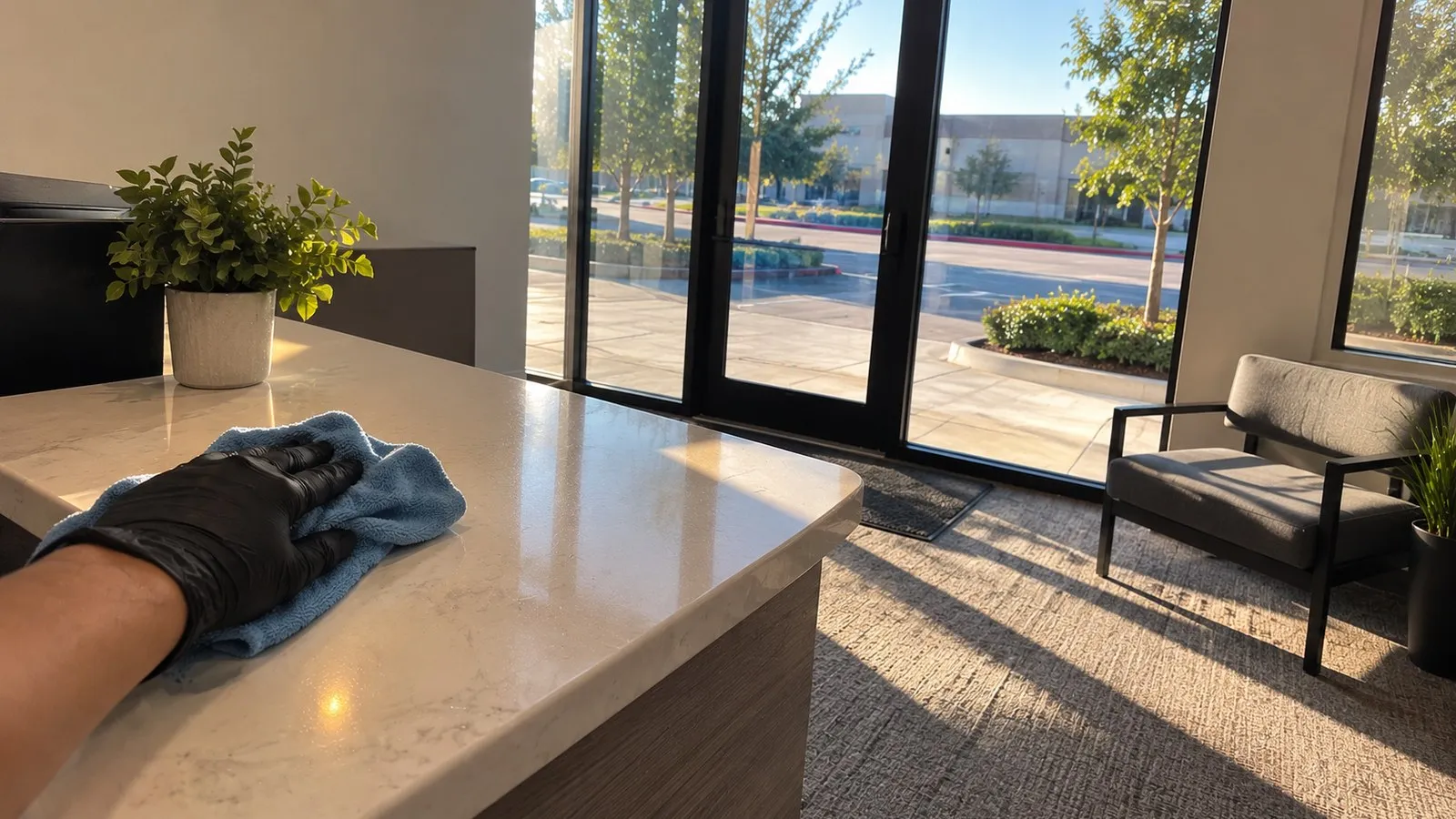
- Front door and reception: fingerprints wiped off glass doors, the front counter cleaned, and the arms of waiting room chairs wiped down.
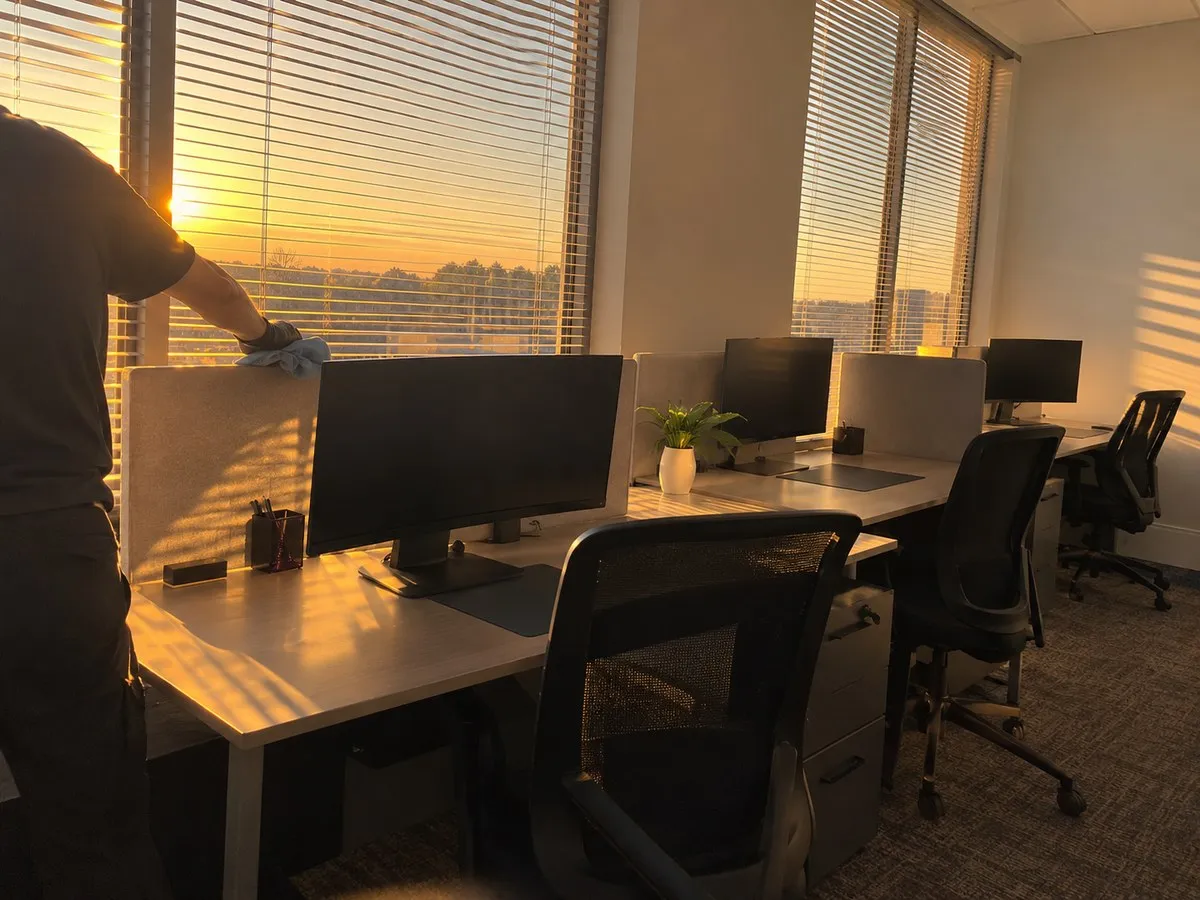
- Workstations: open desk surfaces wiped, chair arms cleaned, and monitor stands and shelves dusted. Screens and keyboards get a light dry dusting at most, since wet cleaners and electronics don't mix.
- Break room: the inside of the microwave, counters, the table, cabinet fronts, the sink, and the fridge handles. These are the spots people touch with food on their hands.
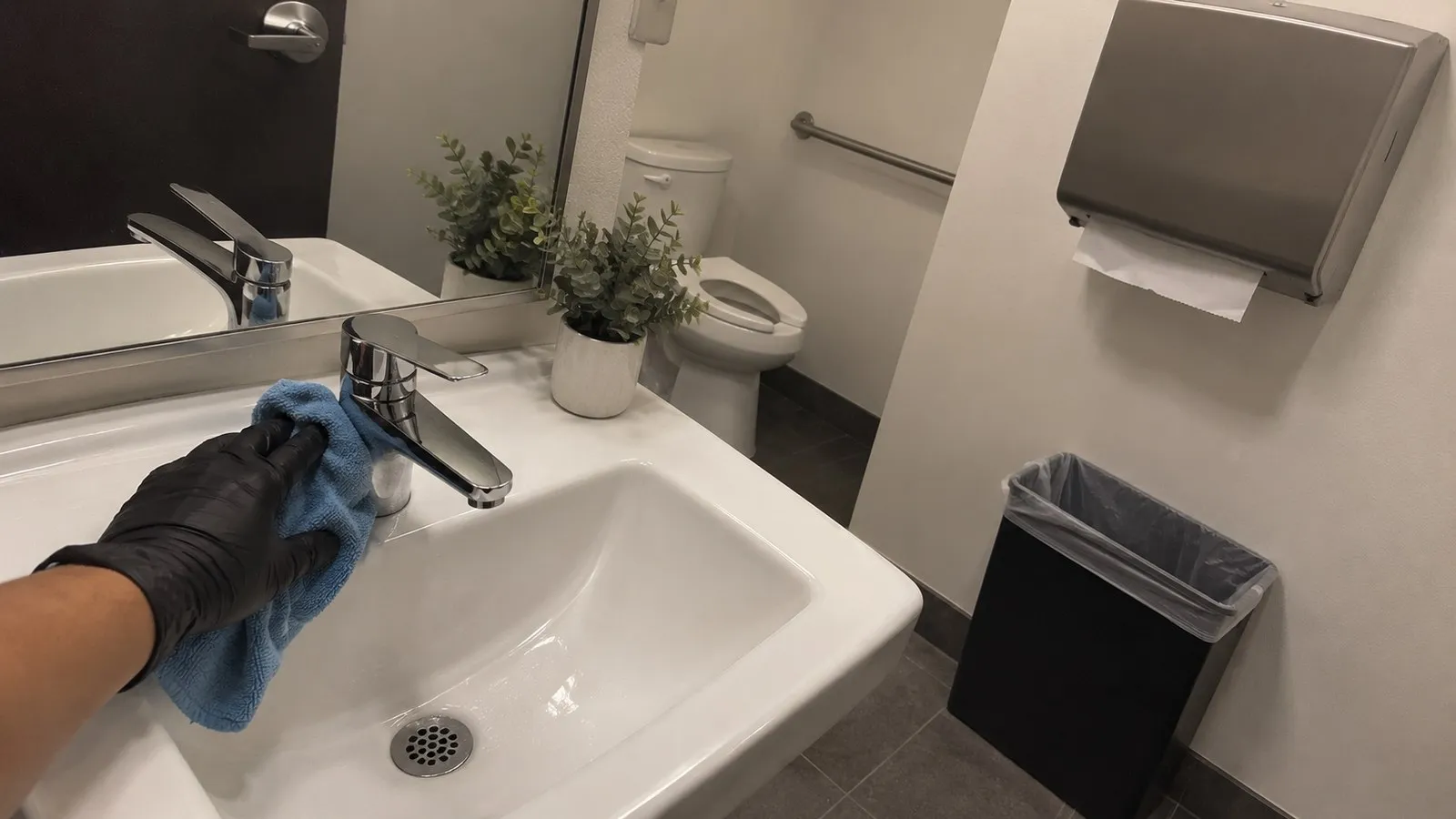
- Restrooms: toilets, sinks, mirrors, stall walls, soap and paper dispensers wiped, and the floor around each toilet base, where odors start.
- Floors last: carpet vacuumed, then hard floors swept and mopped on the way out.
Here's an honest caveat. If your restroom faucets or break room sink have white crust from hard water, a standard visit keeps new spots down. It won't remove scale that's been building for months. That takes a deep clean first, then regular visits keep it from coming back.
A few things usually aren't part of a standard visit. Ask about them up front so nobody's surprised:
- Emptying and scrubbing the inside of the office fridge
- Interior and exterior window cleaning, which we offer as its own service
- Deep cleaning of fabric chairs and lobby seating, which falls under our upholstery cleaning
- Carpet shampooing or heavy floor care, beyond the floor stripping and waxing covered earlier
- Moving papers, files, or anything stacked on a desk
That last one matters more than people think. Most cleaners won't shuffle your papers, and you don't want them to. If a desk is buried, it gets dusted around, not wiped. A clear desk gets a real cleaning.
Getting the most out of each visit takes about five minutes of prep. Ask your team to clear their desks before they leave. Point out anything that's off-limits, like a locked records room or a server closet. If you have natural stone counters or wood surfaces that need a specific product, tell us. We bring our own supplies, and we'll use yours on request for delicate surfaces like that.
You don't need to be there while we clean. Just sort out how we'll get in, whether that's a door code, a key, or someone letting us in after hours. Then the checklist does the rest.
Vetting a Cleaning Vendor for After-Hours Office Access
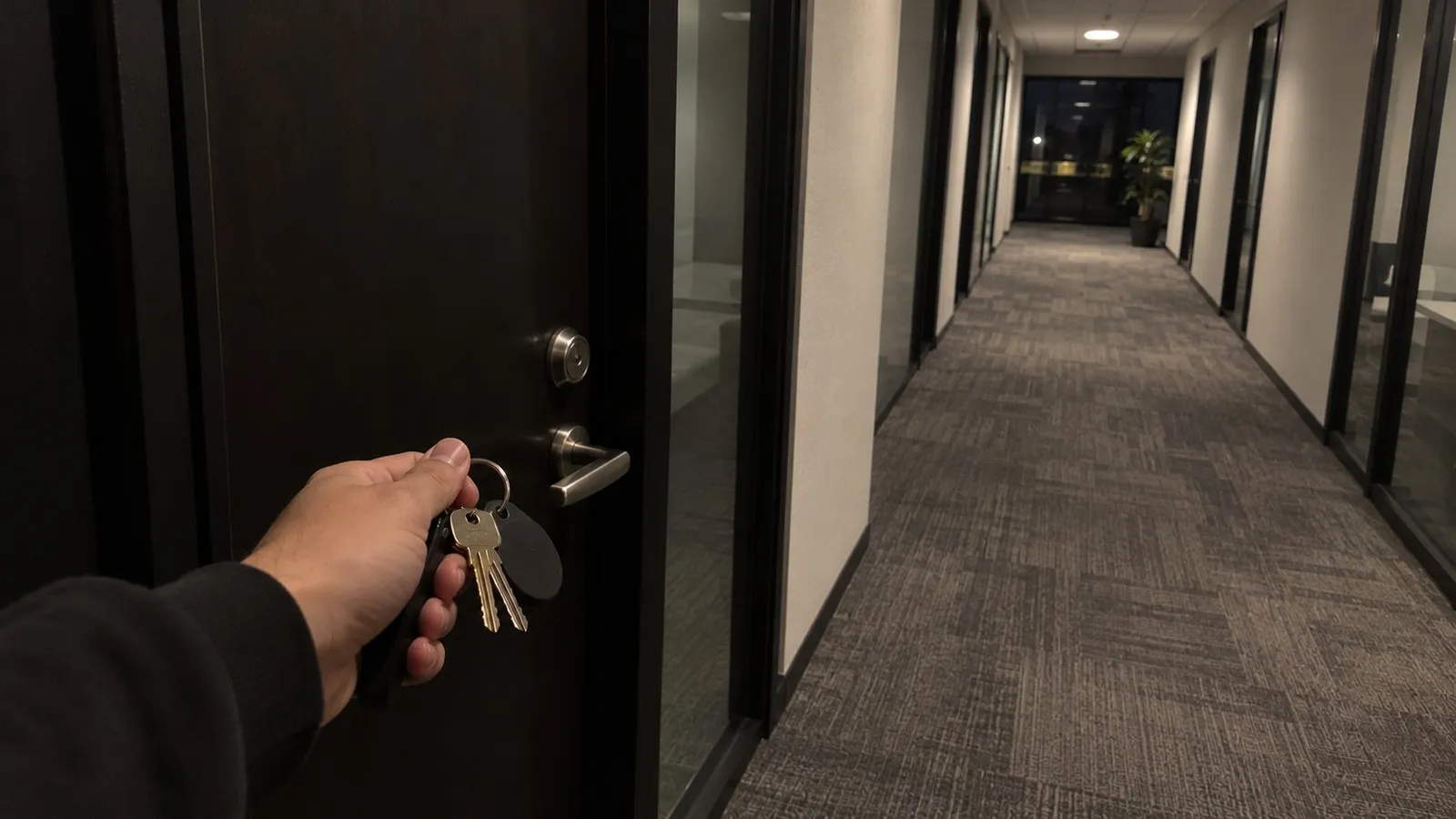
After-hours cleaning means a crew is alone in your office with your files, your computers, and your alarm code. So the real question isn't whether they can clean. It's whether you can trust them with the keys. Before you hand over access to anyone, get clear answers on who is coming, how they get in, and what happens if something goes wrong.
Start with the people. Ask whether every cleaner who enters your space has passed a background check, not just the owner or the person who gave you the quote. Ask whether the vendor uses its own employees or hands jobs to subcontractors you've never met. Then ask whether you'll see the same faces each visit. A steady crew learns your space, knows which doors stay locked, and notices when something looks off.
Next, ask how they handle access. These answers show you how careful a vendor really is:
- Who holds your key or door code, and how is it stored?
- Can you give them their own alarm code, so you can see when they come and go and shut it off if you part ways?
- How do they lock up, and do they check every door before leaving?
- What do they do if the alarm goes off or a door won't lock?
- Who do you call if something is missing or damaged, and how fast will someone get back to you?
Ask for proof of insurance, too. Any vendor working inside a business should be able to show it without fuss. If they dodge the question or say they'll send it later and never do, take that as your answer.
A few setup steps on your end make a big difference. Give the cleaning crew its own code instead of sharing a staff code. Lock away anything sensitive, like client records, cash, or a server closet. Then tell the vendor plainly which rooms are off-limits. A good crew won't argue with any of that. They'll be glad you told them.
Watch out for a few red flags. These include a vendor who wants a long contract before you've seen a single visit, a different crew every time with no explanation, or vague answers about who's doing the work. A long contract matters most here. If trust breaks down, you shouldn't be stuck paying for months to get out.
Here's how we line up against that list. Our cleaners are fully background-checked and vetted before they ever walk into a client's space. You don't need to be there while we clean. There's no contract, so if something isn't working, you can change or cancel any time without a penalty. Ask us any of the questions above. We'll give you a straight answer before you hand over a key.
How Office Cleaning Pricing Works and What Drives Cost
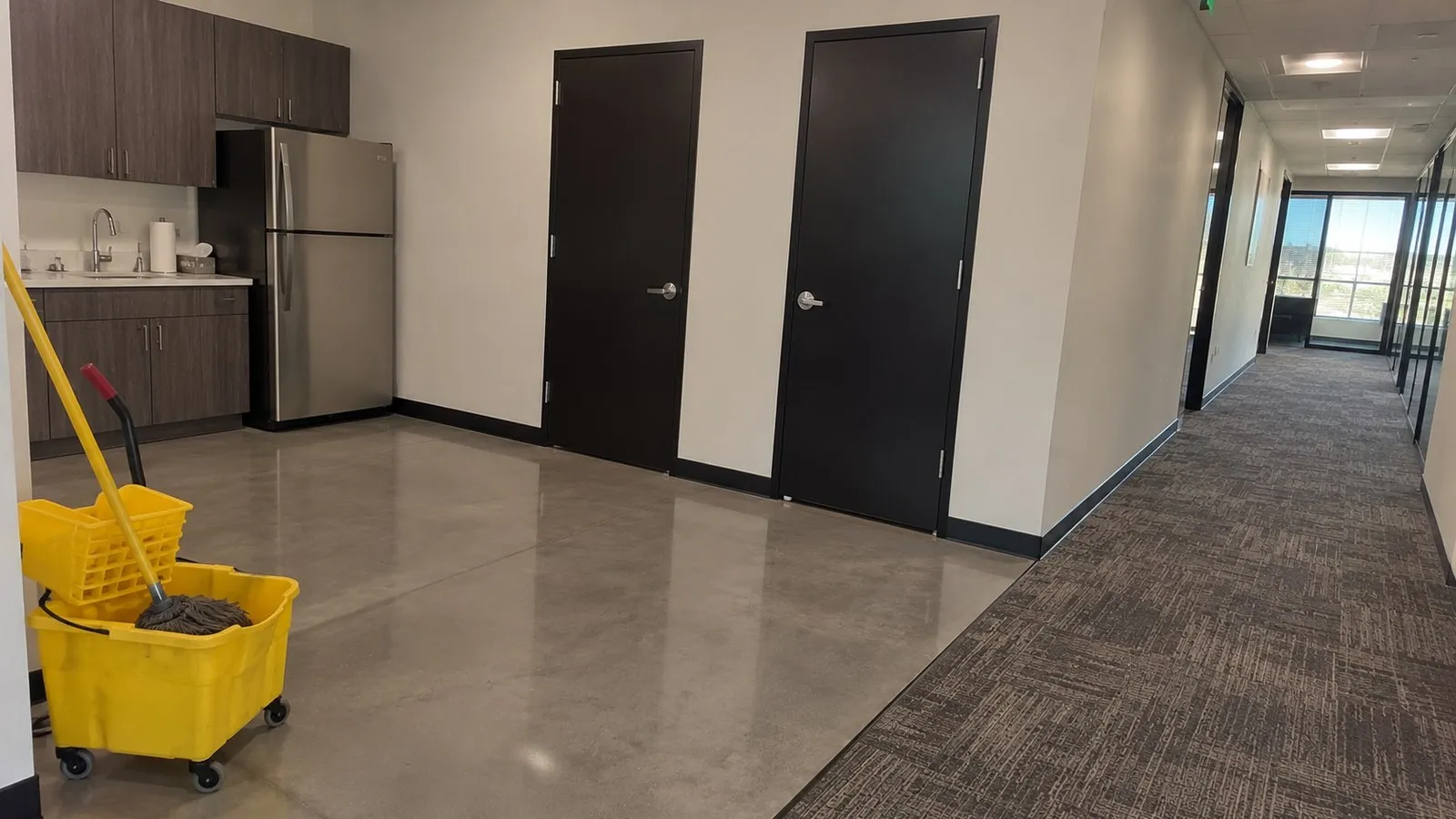
Office cleaning costs come down to two things: how much space gets cleaned and how often. Everything else nudges the number up or down from there. Once you know how vendors build a price, you can compare quotes fairly. You'll also spot the one that looks cheap but isn't.
Most cleaning companies price office work in one of four ways:
- Flat rate per visit. You get one set price for each clean, based on your space and the checklist. It's easy to budget for.
- Monthly rate. Visits get bundled into one bill. It's common with janitorial firms and often tied to a contract.
- Hourly. You pay for time on site. The catch is that a slow crew costs you more, and you won't know the total until the work is done.
- Per square foot. Bigger spaces use this a lot. It works fine as long as you know what's included at that rate.
No matter which model a vendor uses, these are the things that move the price:
- Square footage. More floor and more desks take more time. This is the biggest factor.
- Restroom count. Restrooms take the most work per square foot. Two restrooms cost more to clean than one, even in the same size suite.
- Frequency. Weekly visits often cost less per visit than every other week, because the space never gets very dirty between cleans.
- The first clean. If the office hasn't been cleaned well in a while, the first visit takes longer. Hard water scale on fixtures is a good example.
- Break room use. A kitchenette where ten people eat lunch every day needs more time than one with a coffee maker and a sink.
- Flooring. Lots of carpet means more vacuuming. Lots of hard floor means more mopping. Special surfaces like natural stone may need a specific product.
- Add-ons. Window cleaning, upholstery cleaning, and fridge clean-outs are usually priced on their own.
Here's an example. Picture two suites of the same size. One has a single restroom and five people who mostly work from home. The other has two restrooms, a busy break room, and a full staff every day. Their square footage is the same, but the second one will cost more to clean. A fair quote should reflect that, and a vendor should be able to explain why.
Watch for a few traps. A low hourly rate with no time estimate can turn into a big bill. A cheap monthly price can hide a short checklist, with the restroom scrub or break room listed as extra. Trip fees and supply charges can show up after the first invoice. Ask for the full price in writing and ask what's not included.
On the home side, we quote a flat price before we arrive, based on square footage and bathroom count. We don't bill by the hour, and we don't charge trip fees or hidden charges. If you're looking at office cleaning for your space, ask us how we'd price it. Tell us your square footage, how many restrooms you have, and how often you want us there, and we'll give you a straight answer.
No-Contract Service for Offices That Want Flexibility
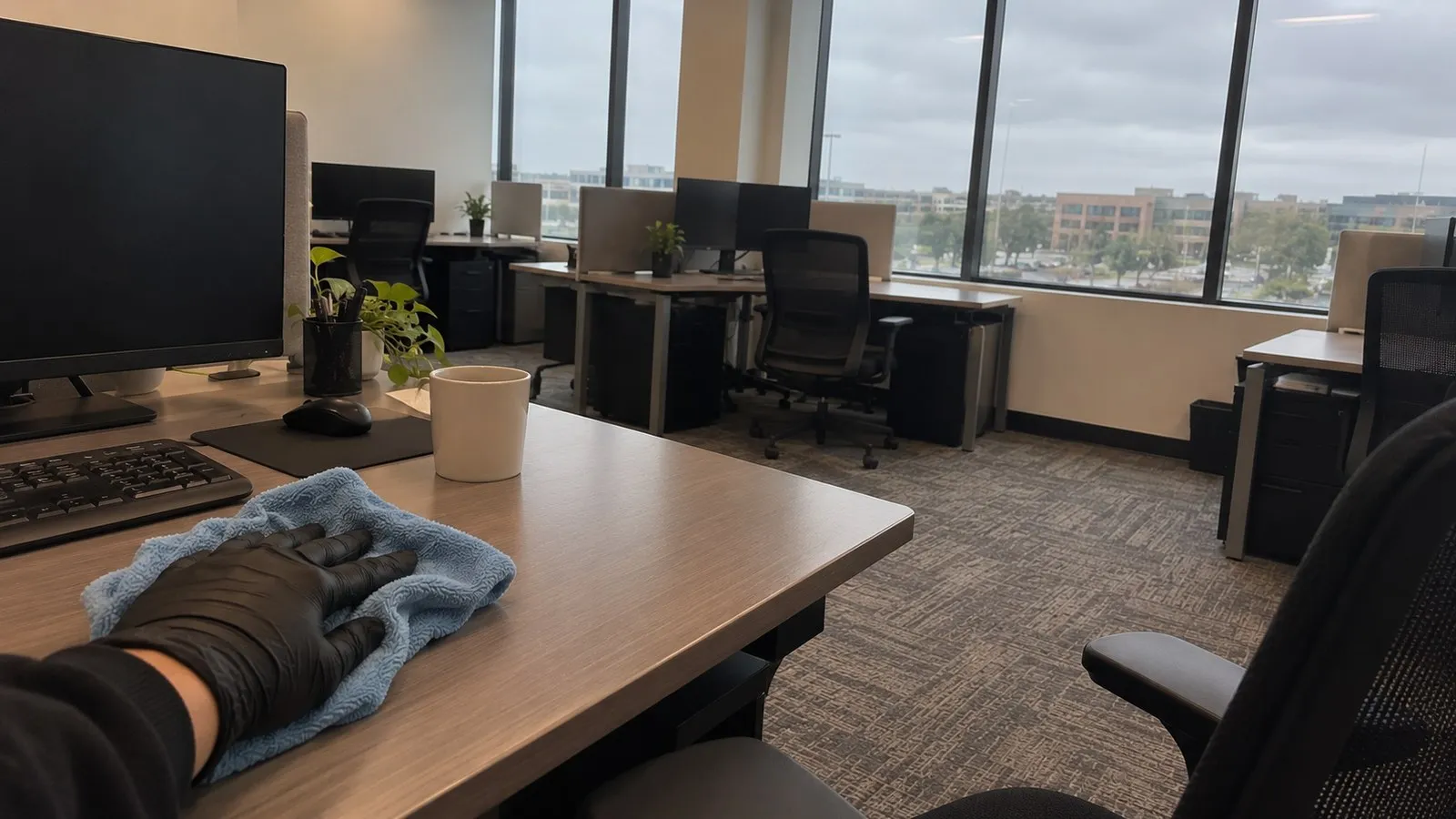
Small offices change. Somebody gets hired. A team goes hybrid. You move to a bigger suite down the road. A cleaning plan that fit in January can be wrong by June. With no contract, you change the plan when the office changes. You don't have to wait for a renewal date.
Here's how that plays out in real life:
- Your staff drops to three days in the office. You cut back from weekly to every other week, because the break room and restrooms aren't getting hit as hard.
- You hire four people and the kitchenette is busy every day. You go the other way and add visits.
- You're moving out of your suite. You stop recurring service and don't pay to leave early.
- You try us for a month and it's not a fit. You cancel and you're done.
That's what no contract means with us. You can adjust service or stop any time without a penalty. There's no fine print to dig through and no fee for changing your mind.
Why do so many cleaning companies want a contract? A long agreement locks in steady income for them. It doesn't do much for you. If you're comparing vendors, read the agreement before you sign. Look for these:
- Auto-renewal. Some contracts roll over for another full term unless you cancel in a short window.
- Notice periods. Some make you give 30 to 90 days' notice, and you keep paying the whole time.
- Early termination fees. Some charge you to leave before the term is up, even if the service was poor.
- Price changes. Find out if the rate can go up during the term and how much warning you'll get.
Here's an honest caveat. No contract doesn't mean you should skip around. Office cleaning works best on a steady schedule. If visits get pushed back again and again, grime builds up, restroom odors set in, and hard water spots on faucets start turning into scale. Then the next visit takes longer to catch up. Flexibility is there so your plan can keep up with your office. It isn't meant to stretch cleanings so far apart that the space slips.
A good way to start is to pick a schedule that fits how your office runs now. Give it a few visits, then look at how the space holds up between cleans. If the restrooms look rough by midweek, add a visit. If things still look fine at the next clean, you might be able to cut back. Either way, it's your call, and you can change it whenever you need to.
You also don't need to be on site for any of it. Once access is set up, we come on schedule and lock up behind us. Your team just walks in to a clean office.
Related services
- General housekeeping
General Housekeeping in Frisco: Pick the Right Cleaning Frequency
- Deep clean
Deep Clean in Frisco: Know When You Need One
- Interior & exterior window cleaning
Interior & Exterior Window Cleaning in Frisco That Fits Your Home's Routine
- Upholstery cleaning
Upholstery Cleaning in Frisco: Know Your Quote Before You Book
- Standard cleaning
Standard Cleaning in Frisco: Know What's Included Before You Book
Back to House cleaning service in FriscoBack to House Cleaning Services Pros of Frisco
Frequently Asked Questions
Common questions about Office & workplace cleaning
Do I need to be at the office during a cleaning visit?
No, you don't need to be there while we clean. Once you've set up access, like a door code or a key, we come on schedule and lock up behind us. Your team just walks in the next morning to a clean office.
Can I supply my own cleaning products for sensitive surfaces?
Yes, we bring our own supplies but will use yours on request. This matters for things like natural stone counters or wood surfaces that need a specific product to avoid damage. Just tell us ahead of time which surfaces need special care.
What if my office hasn't been cleaned professionally in a while?
Expect the first visit to take longer than regular cleanings. Buildup like hard water scale on break room or restroom fixtures needs extra attention the first time around. After that initial deep pass, regular visits keep grime and scale from coming back.
How do I know if I need office cleaning or a janitorial contract?
Picture your space after a normal week to decide. If crumbs in the break room, smudged glass, and restrooms needing a scrub are the main issues, office cleaning covers it. If you have a large building, all-day foot traffic, and supply closets to restock, you need a janitorial company instead.
Ready to Get Started?
Call (945) 777-3816 now for a free estimate.