
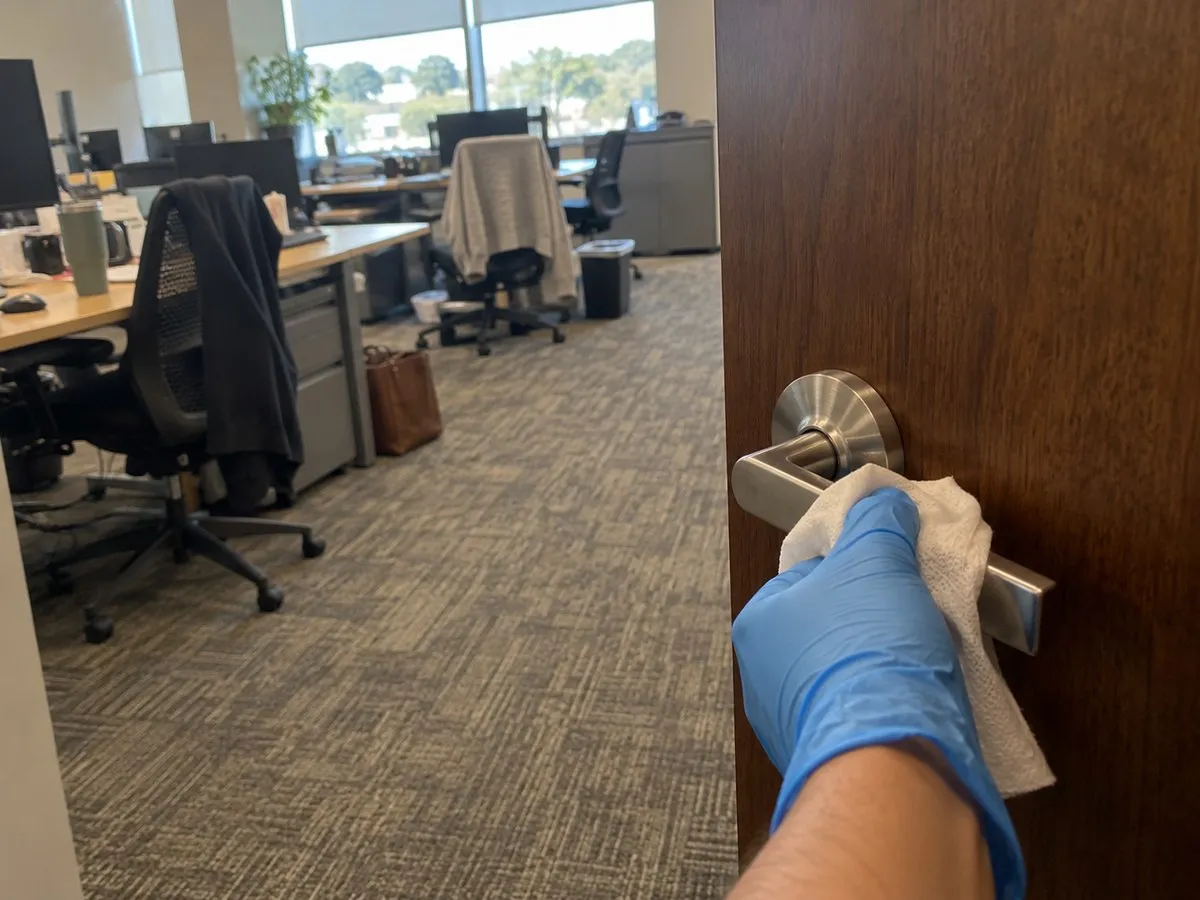
Commercial / Disinfecting Cleaning in Frisco for Occupied Workspaces
Cleaning, Sanitizing, and Disinfecting Are Not the Same Service
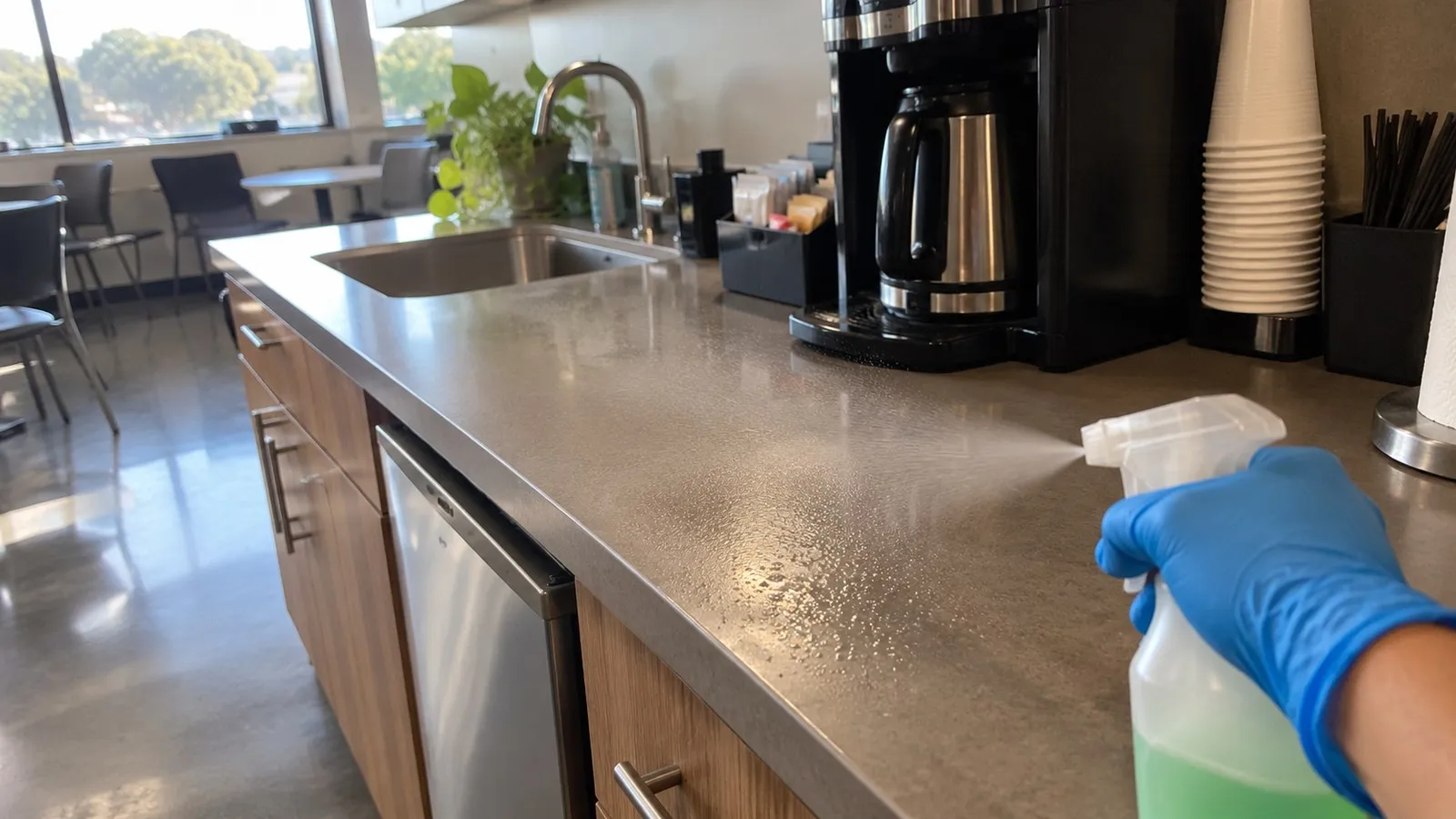
Cleaning removes dirt you can see. Sanitizing lowers the germ count on a surface, and disinfecting is meant to kill the germs listed on a product's label. Each step only works if the step before it was done first, so ask exactly which one you're getting.
People use these three words as if they mean the same thing. They don't. If you're paying for one and expecting another, you won't know until someone in your office catches whatever's going around.
- Cleaning removes dirt, dust, crumbs, smudges, and grime. It makes a space look good and takes away a lot of what germs live on. It doesn't promise to kill anything.
- Sanitizing lowers the number of germs on a surface to a safer level. It's common on surfaces that touch food, like break room counters.
- Disinfecting uses a product made to kill the specific germs printed on its label. It's for high-touch spots where sickness spreads, like door handles, light switches, shared phones, faucet handles, and restroom fixtures.
Here's the part most people miss. You can't skip to disinfecting. A disinfectant sprayed on a greasy desk or a sticky door handle mostly lands on the grime, not on the surface underneath. The dirt has to come off first. That's why a real disinfecting visit always starts with plain cleaning.
The second thing people miss is time. A disinfectant isn't a quick spray and wipe. Each product's label says how long the surface has to stay wet for it to work. Wipe it dry too soon and you've mostly just cleaned it. When a provider says they disinfect, that wait time is what separates a real result from a nice smell.
So which one does your space need? A small office with a few people who mostly keep to their own desks may do fine with steady cleaning and a sanitized break room. A busy front desk, a shared restroom, or a team where one sick person tends to become five sick people needs disinfecting on the high-touch spots. Most workplaces don't need every surface disinfected. They need the right surfaces disinfected and everything else kept clean.
Our team uses eco-friendly, pet-safe, non-toxic products, and our equipment is HEPA-filtered to pull dust and allergens out of the air instead of pushing them around. If you need true disinfecting on certain surfaces, tell us up front. We'll be straight with you about which product goes where, so you know what's being cleaned and what's being disinfected.
Before you hire anyone for disinfecting work, ask these questions:
- Which surfaces get disinfected, and which only get cleaned?
- What product do you use on those surfaces, and what germs does its label say it works on?
- Do you leave it on as long as the label says, or do you spray and wipe right away?
- Do you clean the surface before you disinfect it?
If the answers are vague, you're probably paying for cleaning with a disinfecting label on it.
Signs Your Frisco Office Needs Disinfecting Now
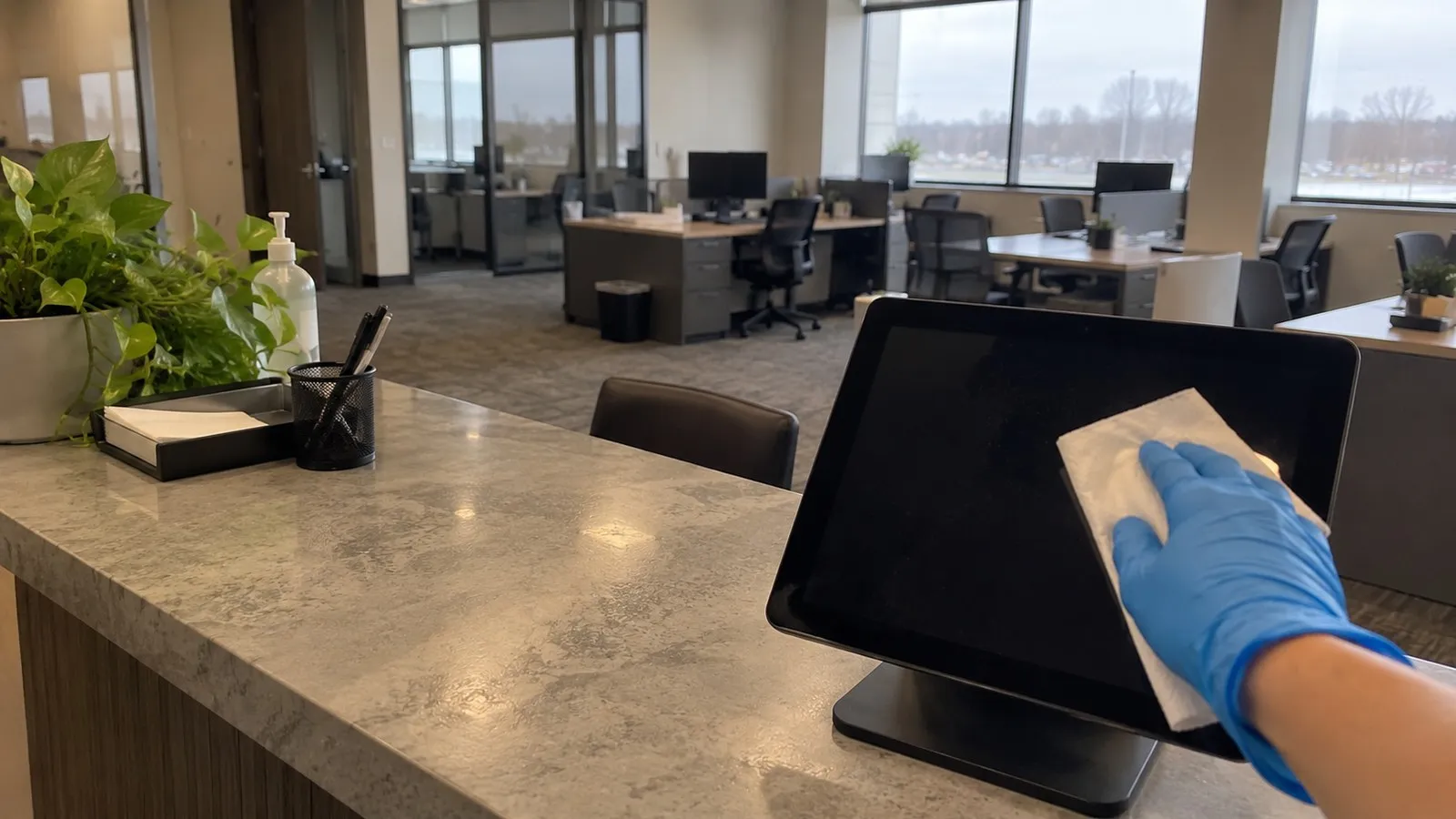
You don't need a calendar reminder to know when it's time. Your office usually tells you. These are the signs that the high-touch spots need disinfecting this week, not someday.
- Sick days are stacking up. One person out with a bug is normal. Three people out with the same thing in two weeks is a pattern. When illness moves desk to desk, the shared surfaces are part of how it travels.
- Someone came in sick and touched everything. They used the coffee maker, the copier, the restroom, and the conference room. Once they're home, those surfaces still carry what they left behind.
- Your space has a lot of hands on the same things. A front desk with a sign-in tablet, a shared phone, a break room fridge everyone opens, and one restroom for the whole floor all fit here. The more people touching the same handle, the more it matters.
- Visitors come and go all day. Offices that see clients, patients, or customers walking in bring in germs from outside your team. You can't control who walks through the door, but you can control how often the door handle gets disinfected.
- You're reopening after time away. If the office sat empty over a holiday break or a slow stretch, or you're moving into a new suite, it makes sense to start with clean, disinfected surfaces before everyone settles back in.
- The break room looks rough. Sticky counters, a crusty microwave, and a sink full of mugs mean food-contact surfaces aren't getting handled. That's a cleaning and sanitizing problem first, and it's often a sign the high-touch spots nearby are getting skipped too.
Here's a simple test. Walk the path an employee takes on a normal morning: front door, light switch, elevator button or stair rail, restroom door, faucet, fridge handle, coffee maker. Count how many of those you'd be comfortable touching right before you eat lunch. If the answer is not many, those are the surfaces to disinfect first.
Timing matters too. Cold and flu season puts more pressure on a shared office than the rest of the year does. If your team tends to pass things around every winter, it's smarter to get disinfecting on a schedule before the first wave hits than to scramble after half the staff is out.
Now for the honest part. Not every office needs disinfecting right now. A small team in private offices, with nobody sick, few visitors, and a break room that gets wiped down regularly, is probably fine with steady cleaning. Paying for disinfecting every week in that setup won't buy you much. You can also handle a lot between visits yourself. Keep disinfecting wipes by the coffee maker and the restroom door, and ask people to stay home when they're sick. Those two habits do more than most people expect.
The time to bring in help is when the signs above start showing up together. A sick team, a busy front desk, and a break room nobody owns is the combination where regular cleaning stops keeping up.
When Standard Office Cleaning Is Enough
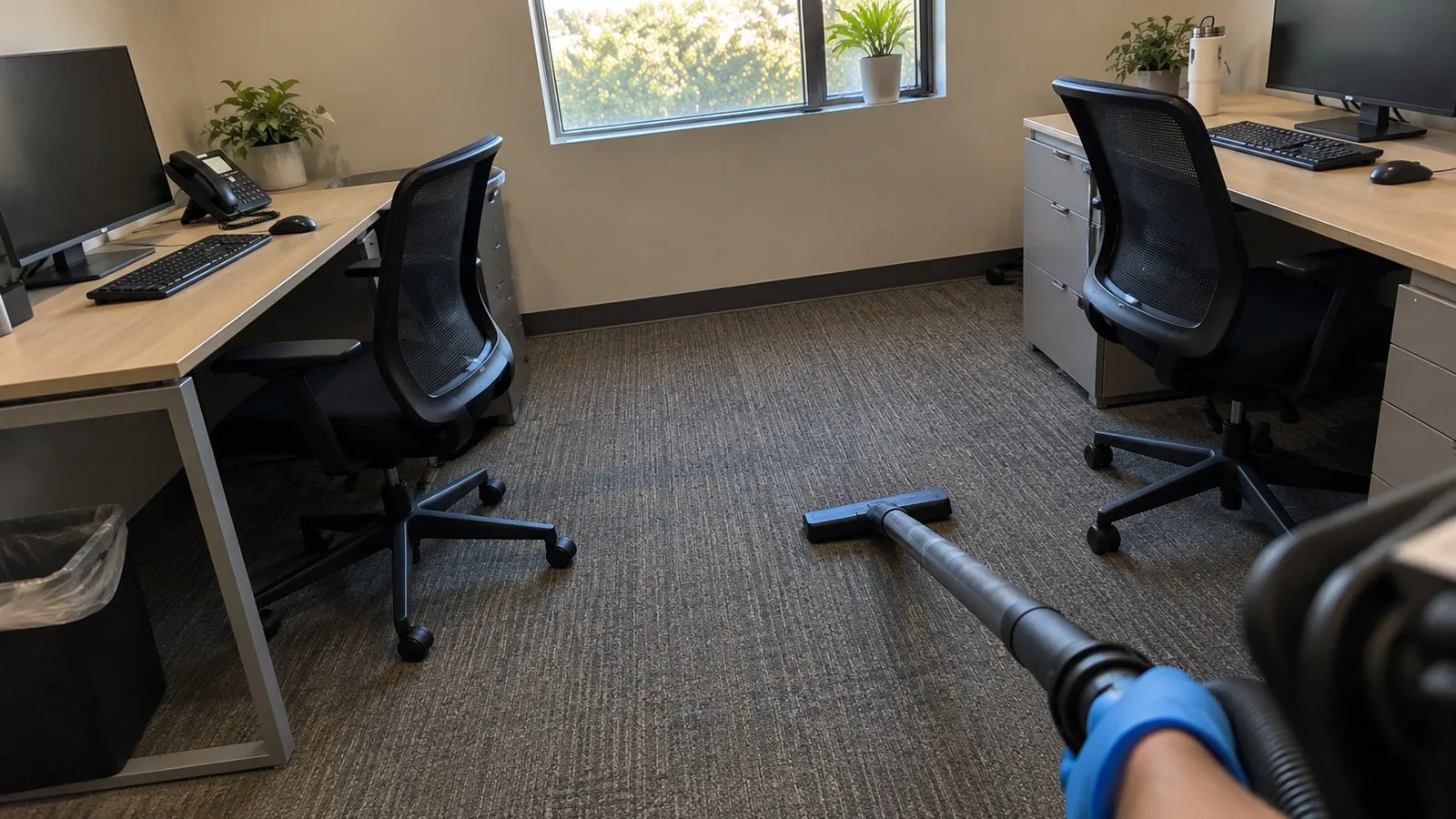
A lot of offices don't need disinfecting at all. They need good cleaning done often enough that dirt never builds up. If that's you, paying extra for disinfecting won't make your space healthier. It'll just make your bill bigger.
Standard office cleaning is the basic job done well. That means emptying trash, dusting desks and shelves, vacuuming carpet, mopping hard floors, wiping down the break room, and cleaning the restroom. Clean surfaces give germs less to cling to, and that alone does a lot of the work people expect from disinfecting.
Here's when that's enough:
- Your team is small and steady. Five people who all know each other and keep to their own desks don't share many surfaces.
- You don't get walk-in traffic. A back office, a home-based business suite, or a space where clients rarely visit doesn't bring in germs from outside.
- Each person has their own gear. Their own keyboard, phone, and chair mean fewer shared touch points.
- Nobody's been sick lately. If illness isn't moving through the office, there's nothing to get ahead of.
- The space gets cleaned often. A weekly or twice-weekly visit keeps things from getting grimy in between.
Think about a four-person accounting office with private rooms, one restroom, and a coffee maker. The phones only ring with clients who never come in. That office needs clean floors, a clean restroom, and a break room nobody's afraid of. It doesn't need someone disinfecting every light switch every week.
How often you clean matters more than what you clean with. An office cleaned every week with plain products is usually in better shape than one that gets a big disinfecting visit once a quarter and nothing in between. If you have a tight budget, spend it on how often the cleaning happens first.
Dust and allergens are a separate issue. If people in your office deal with sneezing or itchy eyes, it's often dust in the carpet and air, not germs on the door handle. Our equipment is HEPA-filtered, so vacuuming pulls dust and allergens out instead of blowing them back around. For a lot of offices, that's the change people notice.
You also don't have to pick one forever. Plenty of offices run on standard cleaning most of the year and add disinfecting only when the warning signs above start to stack up, or when cold and flu season starts. That's a reasonable way to handle it. We operate without contracts, so you can adjust your service when your needs change and drop back down when they settle.
If someone tells you every office needs full disinfecting every visit, be skeptical. Some do. Most don't. The honest answer depends on how many people share your space, who walks in the door, and whether anyone's sick right now.
For routine upkeep across a whole facility, see general housekeeping.
What Makes a Workspace Safe to Disinfect While Occupied
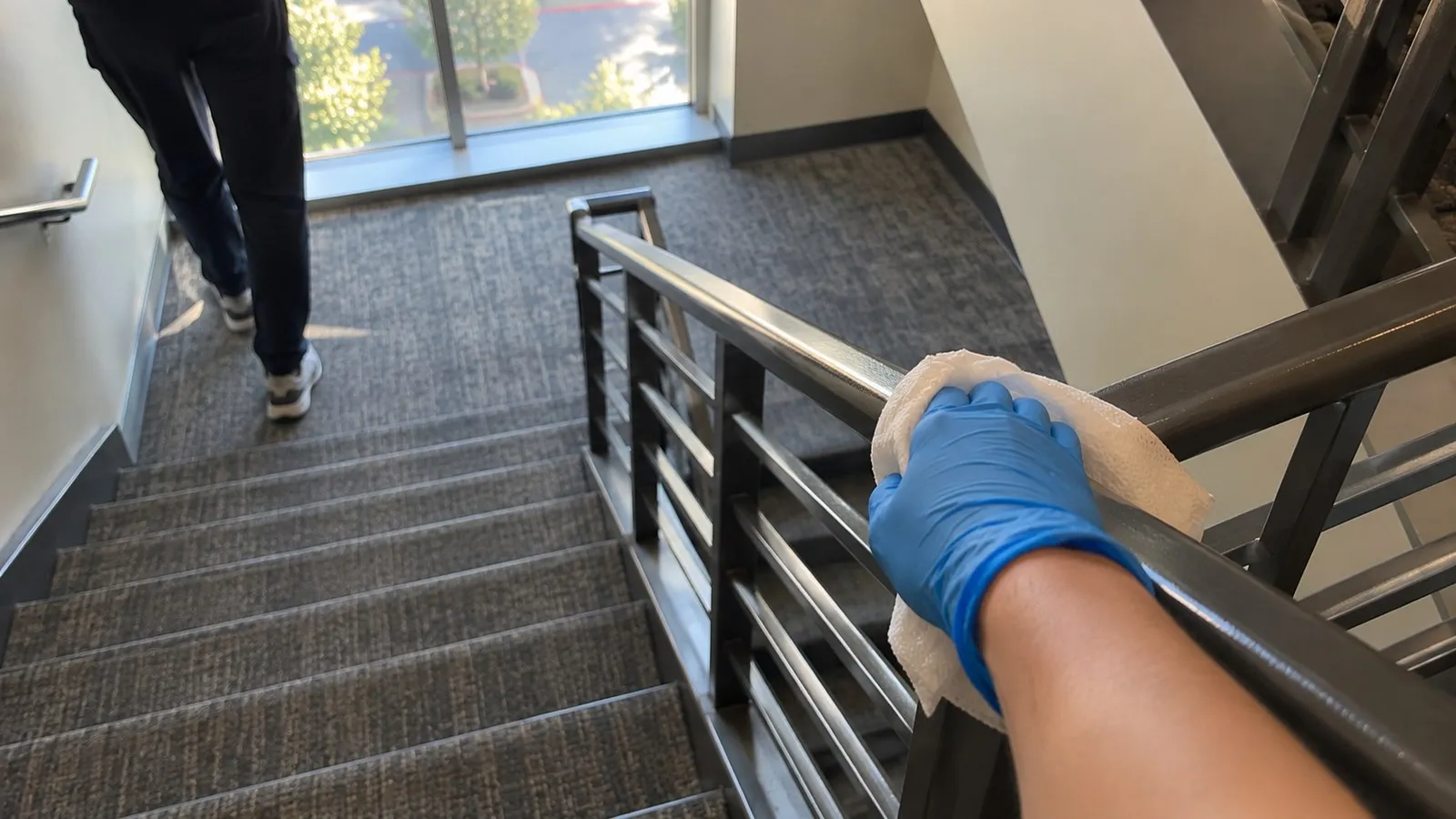
Most offices can't clear the building every time a surface needs disinfecting. People still have to answer phones and see clients. Whether it's safe to disinfect while your team is working comes down to three things: the product, the surface, and the people sitting near it.
Start with the product. Every disinfectant label spells out how to use it safely, and some products are a lot gentler to be around than others. A strong-smelling product that's fine in an empty building at night can give someone at the next desk a headache by 10 a.m. If people will be in the room, the product has to be one that's reasonable to use around them, and it has to be used the way the label says. Our team uses eco-friendly, pet-safe, non-toxic products, which matters most when the space is full of people.
Next is the surface. Some spots are easy to disinfect with people around. Others need a quiet window.
- Door handles, light switches, and stair rails are quick to treat and easy to work around.
- Shared keyboards, phones, and tablets need a product that's safe for electronics, and nobody can be using them during the label's wet time.
- Break room counters and tables that touch food need a product made for food-contact surfaces. Some labels also call for a rinse afterward.
- Restrooms are easiest to do when nobody needs them for a few minutes, so a single-stall restroom in a busy office takes some planning.
- Hard floors in hallways can get slick while they're wet, so walkways need a heads-up or a time when foot traffic is light.
Then think about your people. Ask before you schedule. Does anyone have asthma, allergies, or a sensitivity to strong smells? Is anyone pregnant or worried about chemicals? A person who sits right next to the copier shouldn't learn about disinfecting when a cloud of spray drifts over their desk. A two-line email the day before solves most of this.
Timing also decides whether the job gets done right. As we covered above, a disinfectant only works if the surface stays wet for the full time on the label. In a busy office, that's the hard part. Someone grabs the fridge handle 30 seconds after it's sprayed, and the job is mostly undone. That's why high-traffic spots are often better saved for before opening, lunch, or the end of the day, when hands stay off long enough for the product to work.
Here's a simple way to picture it. A front desk can usually be wiped and left to sit while the receptionist steps away for five minutes. The shared restroom and the break room are better handled when the office is quiet. Your server closet or anyone's personal workstation may not need disinfecting at all.
If a provider says they'll spray everything at noon with the whole staff at their desks, ask what product they're using and how they'll keep hands off surfaces long enough for it to work. A good answer names the product, the spots, and the timing. A vague answer means the work probably won't be done the way the label requires.
How Commercial Cleaning Pricing Works
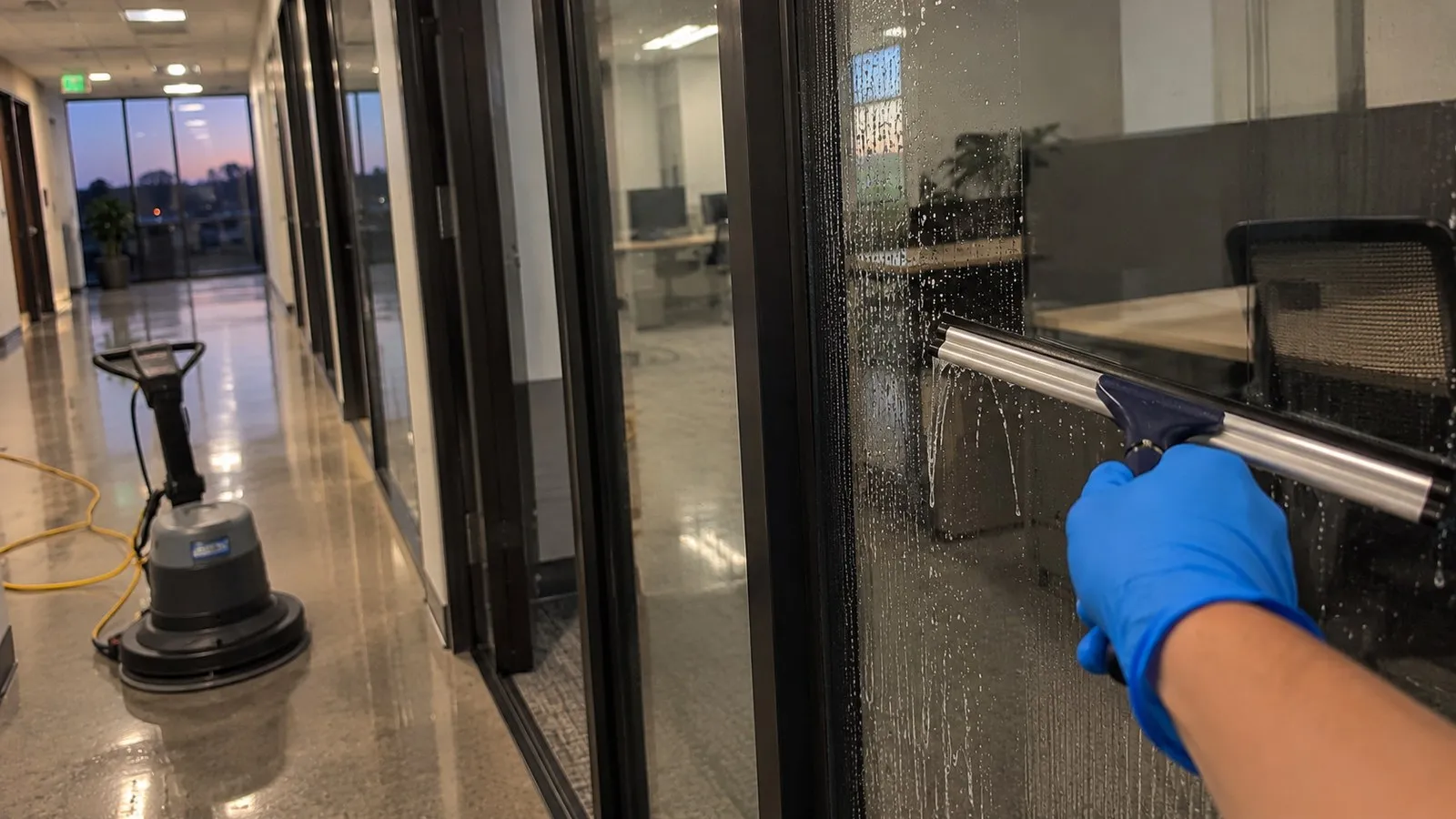
Commercial cleaning doesn't have one standard price. Two offices the same size can get very different quotes, and that's usually fair. The price follows the work. Once you know what drives it, you can tell a good quote from a padded one.
Most providers price commercial work in one of a few ways:
- Flat rate per visit. You agree on a set price for a set list of tasks. It's easy to budget, as long as the task list is written down.
- Hourly. You pay for the time the crew spends on site. This can work for odd jobs, but it's hard to know your total until the bill shows up.
- By square footage. The price is tied to the size of the space. It's a fair starting point, but size alone doesn't tell the whole story.
- Monthly service plan. Regular visits get bundled into one monthly charge. Ask what happens if you need to change it or stop.
These things push the price up or down:
- Size and layout. More square feet takes more time. So do lots of small rooms, compared with one open floor.
- Restrooms and break rooms. These take the longest to do right. A suite with three restrooms costs more to clean than one with a single stall.
- How often you book. Weekly visits keep dirt from piling up, so each visit is lighter. A space that hasn't been cleaned in months needs a longer first visit.
- Cleaning versus disinfecting. Disinfecting high-touch spots adds time, because the surface has to be cleaned first and then stay wet for the label's full contact time. That's real work, and it should show up as its own line on a quote.
- Floors. Carpet, tile, and hard floors each take different equipment and time.
- When the work happens. Before opening, after hours, or weekends can affect the price, depending on the provider.
- Special requests. Window cleaning, upholstery, or anything outside the normal list will add to the total.
Here's how that plays out. A small office with private rooms and one restroom, cleaned every week, is a simple job. A busy front office with walk-in clients, two restrooms, a shared kitchen, and disinfecting on every door handle during flu season is a much bigger one, even at the same square footage.
Before you sign with anyone, ask these questions:
- Is the price flat per visit, or will it change based on hours?
- What's on the task list, in writing?
- Which surfaces get disinfected, and is that priced separately from cleaning?
- Are there trip fees, supply fees, or any other charges not on the quote?
- Do I have to sign a contract, and what does it cost to cancel?
A clear quote answers all five without any back-and-forth. If you can't tell what you're paying for, you can't tell whether you're getting it.
We don't lock you in. There's no contract, so you can adjust or cancel service at any time without a penalty. That makes it easy to start with standard cleaning, add disinfecting when your office needs it, and scale back when things calm down.
Related services
- Office cleaning
Office Cleaning in Frisco: Flat-Rate, No-Contract Service
- General housekeeping
General Housekeeping in Frisco: Pick the Right Cleaning Frequency
- Interior & exterior window cleaning
Interior & Exterior Window Cleaning in Frisco That Fits Your Home's Routine
- Upholstery cleaning
Upholstery Cleaning in Frisco: Know Your Quote Before You Book
Back to Janitorial service in FriscoBack to House Cleaning Services Pros of Frisco
Frequently Asked Questions
Common questions about Commercial / disinfecting cleaning
Can my office stay open while disinfecting is happening?
Yes, most offices can stay open during disinfecting if it's planned around the right surfaces. Quick spots like door handles and light switches are easy to treat while people work nearby. Shared keyboards, phones, and restrooms usually need a quieter window, like before opening or at lunch, so the product has time to stay wet and work.
Do I need to warn my team before a disinfecting visit?
Yes, a short heads-up helps everyone and avoids problems. Ask ahead of time if anyone has asthma, allergies, or a sensitivity to strong smells, or if anyone is pregnant or worried about chemicals. A quick email the day before is usually enough so no one is caught off guard at their desk.
What should I ask a cleaning company before hiring them for disinfecting?
Ask which surfaces they disinfect versus just clean, what product they use, and whether they let it sit as long as the label requires. Also ask if they clean the surface first, since a disinfectant sprayed over grime mostly lands on the dirt instead of the surface underneath. Vague answers to these questions usually mean you're paying for cleaning with a disinfecting label on it.
Ready to Get Started?
Call (945) 777-3816 now for a free estimate.