
Decide Between Flat-Rate and Hourly Office Cleaning Pricing
Hourly pricing means you pay for the time the cleaner spends, so your bill can change from visit to visit. Flat-rate pricing means you know the cost before anyone walks in the door. We quote flat, based on square footage and bathroom count, with no hourly billing and no trip fees.
Most cleaning companies price office work in one of three ways. Each one shifts the risk to a different person. Before you compare quotes, figure out which kind each one is.
- Hourly: You pay for time on site. If the crew is slow, new, or runs into a messy week, you pay more. You can't know the total until the job's done.
- Flat rate per visit: You get one price for a set scope of work. If the job takes longer than planned, that's the cleaner's problem, not yours.
- Monthly contract: You get a set price for a set number of visits, often with a term you're locked into. Read the cancellation terms before you sign.
Hourly can make sense for a one-time job where nobody can guess the scope. For a regular office clean, it's harder to budget. Say your bill is higher one month than the last. You can't tell whether more work got done or the visit just ran long. That's a tough conversation to have with your bookkeeper.
We don't bill by the hour. We give you a flat price before we arrive, based on square footage and bathroom count. There are no trip fees and no hidden charges. You see the number up front and that's the number. We also don't use contracts, so you can change or cancel service any time without a penalty.
With any pricing model, a few things push the cost up or down:
- Square footage: More floor means more to vacuum, mop, and dust.
- Restroom count: Bathrooms take the most time per square foot. A small office with three restrooms can take longer than a bigger one with one.
- Frequency: Weekly visits keep dirt from building up, so each visit stays lighter. Long gaps mean more work each time.
- Break rooms and kitchens: Sinks, microwaves, and fridges add time.
- Extras: Things like interior and exterior window cleaning or upholstery cleaning on lobby chairs are usually priced on their own.
When you're comparing quotes, ask each company these questions:
- Is this price per visit, per hour, or per month?
- What's included in the scope, room by room?
- Are there trip fees, supply fees, or minimums?
- Is there a contract, and what does it cost to cancel?
- Who brings the supplies and equipment?
A low hourly rate can end up costing more than a flat quote once the hours add up. A clear flat price with no contract lets you judge the work on its own, visit after visit. If it isn't working, you can walk away.
Know What a Recurring Office Cleaning Checklist Covers
A recurring office clean is the routine work that keeps your space ready for staff and visitors every week. It's not a top-to-bottom scrub. It's a set list done the same way each visit. That list is the thing you're buying, so you should know what's on it before the first visit.
Here's what a standard recurring checklist usually covers, area by area:
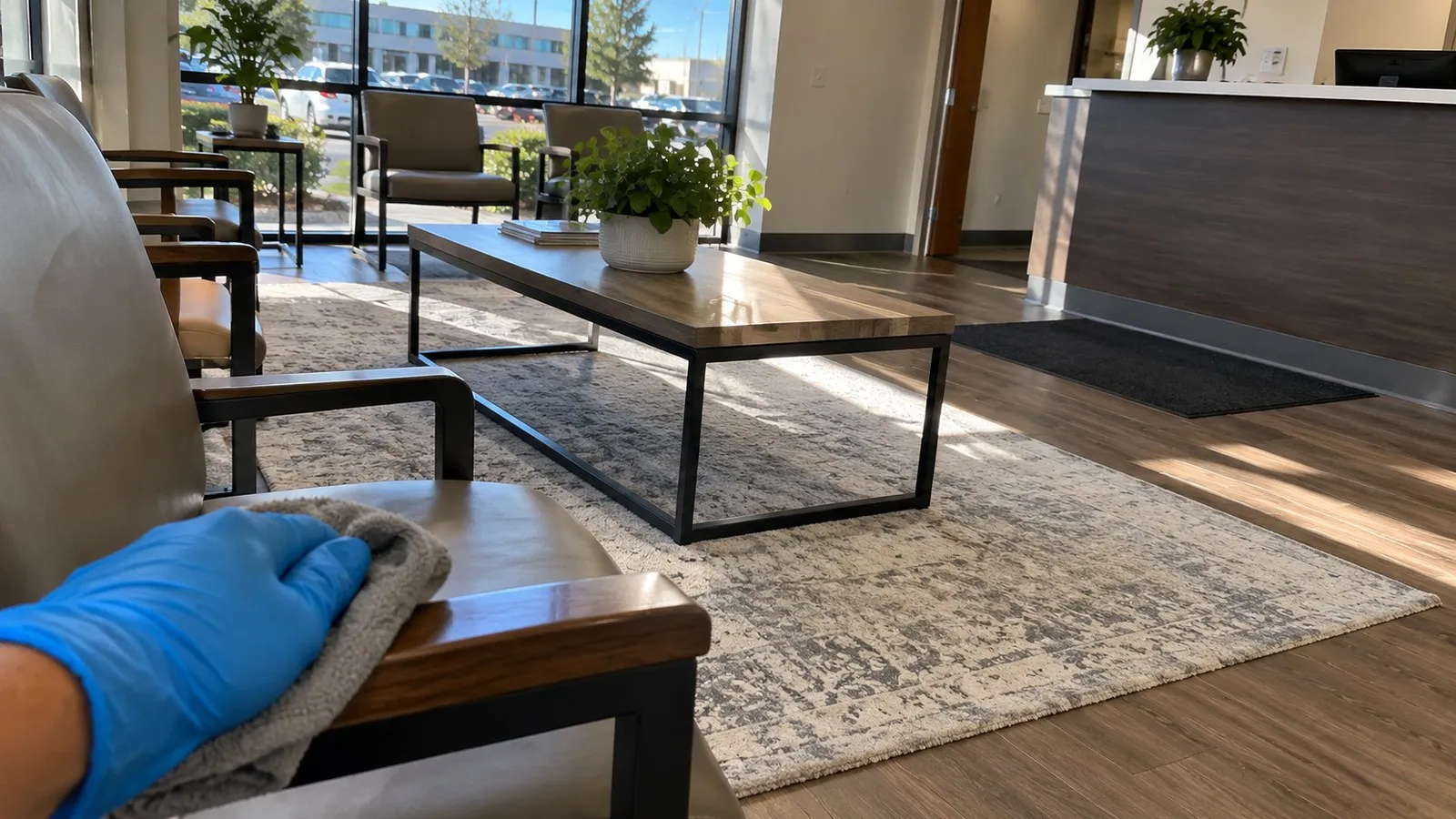
- Entry and lobby: Wipe the front door glass, dust the reception desk, straighten chairs, and vacuum or mop the floor where people walk in.
- Desks and workstations: Dust open desk surfaces, wipe phones and shared keyboards if you want them done, and empty trash and recycling.
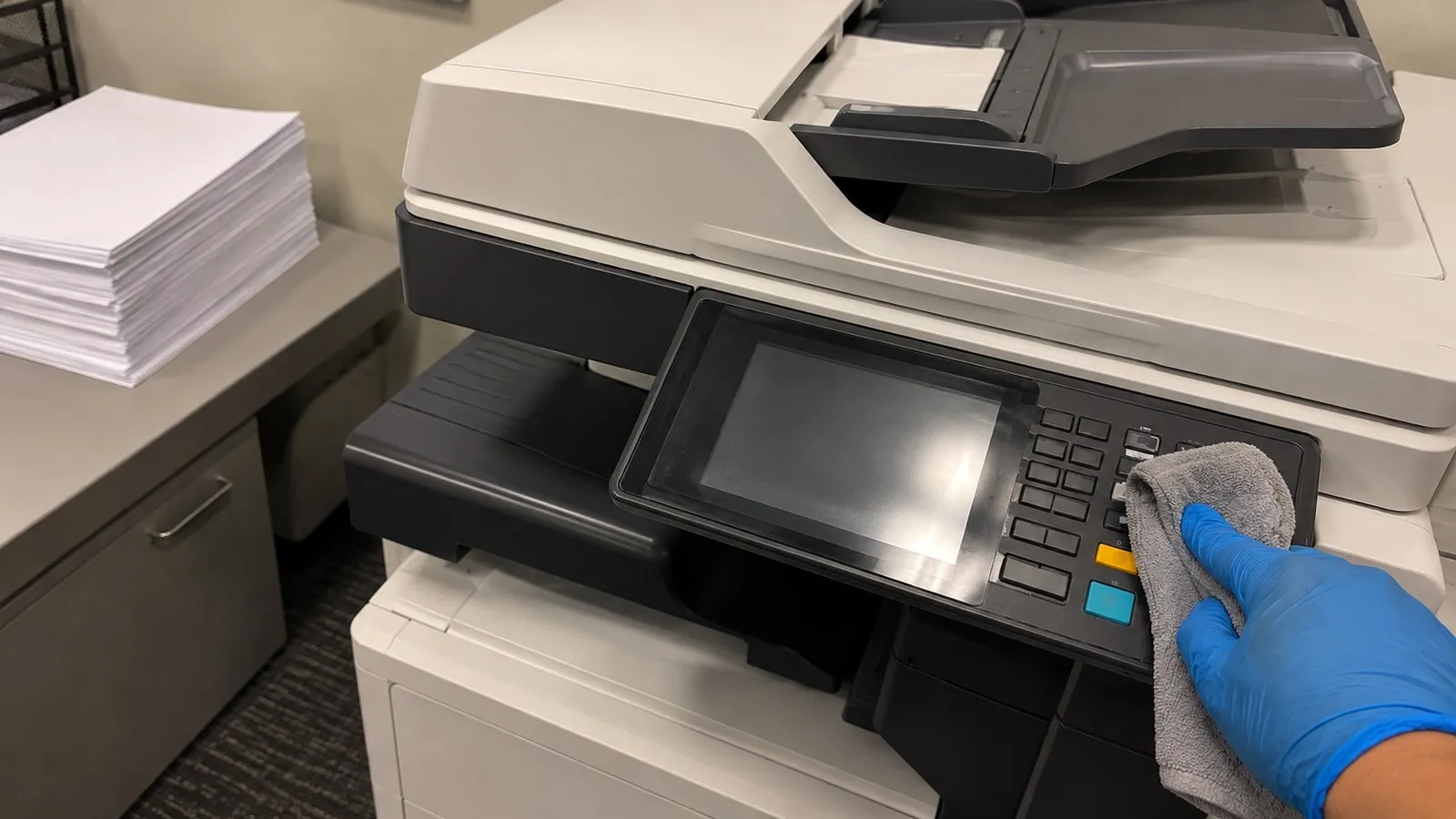
- High-touch spots: Door handles, light switches, railings, and elevator or copier buttons get wiped down.
- Restrooms: Clean and disinfect toilets, sinks, counters, and mirrors. Refill soap and paper if you supply it. Mop the floor and empty the bins.
- Break room or kitchen: Wipe counters, the sink, the outside of the fridge and microwave, and the table. Empty the trash.
- Floors: Vacuum carpet and rugs. Sweep and mop hard floors.
Some tasks don't need to happen every visit. Baseboards, vents, and the tops of tall shelves can rotate onto the list once a month. Ask any cleaner which tasks happen every time and which rotate. If they can't tell you, you won't be able to tell if they got skipped.
Most recurring checklists leave a few things off on purpose:
- Papers and items on desks. Most cleaners won't move your work. Clear what you want wiped.
- Inside the fridge, the microwave, or cabinets, unless you add it.
- Computers, monitors, and other electronics beyond a light dusting.
- Built-up grime or hard water spots on restroom fixtures. One regular visit won't take off months of mineral buildup. That usually takes a deep clean first.
Windows and lobby furniture are their own jobs. We offer interior and exterior window cleaning and upholstery cleaning, and both are scheduled apart from the regular checklist.
What the crew brings matters too. We bring our own supplies: cleaning products, vacuums, cloths, and mops. Our products are eco-friendly, non-toxic, and pet-safe. Our equipment is HEPA-filtered, which helps pull dust and allergens out of the air instead of just stirring them around. That counts in an office where people sit in the same spot for eight hours. If you have a delicate surface, like a natural stone counter or hardwood in a conference room, we'll use the product you provide when you ask. Every cleaner on our team is background-checked.
Once you know the list, checking the work is simple. Walk the space the next morning. Look at the restroom mirrors, the break room sink, and the corners of the floor near the entry. Those are the spots that show a rushed visit first. If something on the list didn't get done, say so. A clear checklist turns that into a quick fix, not an argument.
When germs on shared surfaces are the concern, ask about commercial disinfecting cleaning. For routine upkeep across a whole building, see general housekeeping.
Choose a Cleaning Frequency That Fits Office Size and Traffic
How often you need a cleaner comes down to how fast your office gets dirty. It's not about square footage alone. A big office with three people can go longer between visits than a small one with fifteen people and a busy front door. Start with who's in the space and what they do there.
Here's a simple way to match frequency to your office:
- Every other week: A small office with a handful of staff, one restroom, and few visitors. People mostly sit at desks. Trash builds slowly and floors don't take much of a beating.
- Weekly: The most common fit for a regular office. You've got a full team most days, a shared break room, and a restroom or two that gets steady use. Weekly keeps the checklist work light so nothing piles up.
- Two or more times a week: Offices with customers walking in all day, like a front desk, a showroom, or a waiting room. Also offices where people eat lunch at their desks or the break room sees heavy use. Restrooms and entry floors show wear fast here.
A few signs tell you you've picked a schedule that's too thin. Trash cans are full before the next visit. The restroom smells by midweek. You can see crumbs and dust on the entry floor or the break room counter a few days after a clean. If staff start wiping things down themselves, that's a clear signal too.
The opposite happens as well. If your team works from home two or three days a week, the office may not need a weekly visit. Paying for a clean when the space was empty most of the week doesn't make sense. Try every other week and see how it looks.
Frequency also changes how much each visit has to handle. Long gaps mean more dust, more grime in the restroom, and more work every time the crew comes in. Shorter gaps keep each visit quick and steady. That's why a weekly schedule often feels cleaner than the jump from biweekly would suggest.
If you're stuck between two options, start with the more frequent one for the first month. It's easier to see what the office looks like when it's kept up, then cut back if it's more than you need. Starting too thin leaves you guessing whether the cleaner or the schedule is the problem.
Your needs won't stay the same all year. You might hire more people, add a client-facing room, or shift to more remote days. With us, that's not a problem. We don't use contracts, so you can change your schedule or cancel any time without a penalty. Since our flat quote is based on your square footage and bathroom count, you'll know the price for whatever schedule you pick before we show up.
Not sure where your office lands? Tell us how many people use the space, how many restrooms you have, and how much foot traffic comes through the door. We'll suggest a starting schedule and give you a flat price on the spot.
Trust Who Enters Your Office After Hours
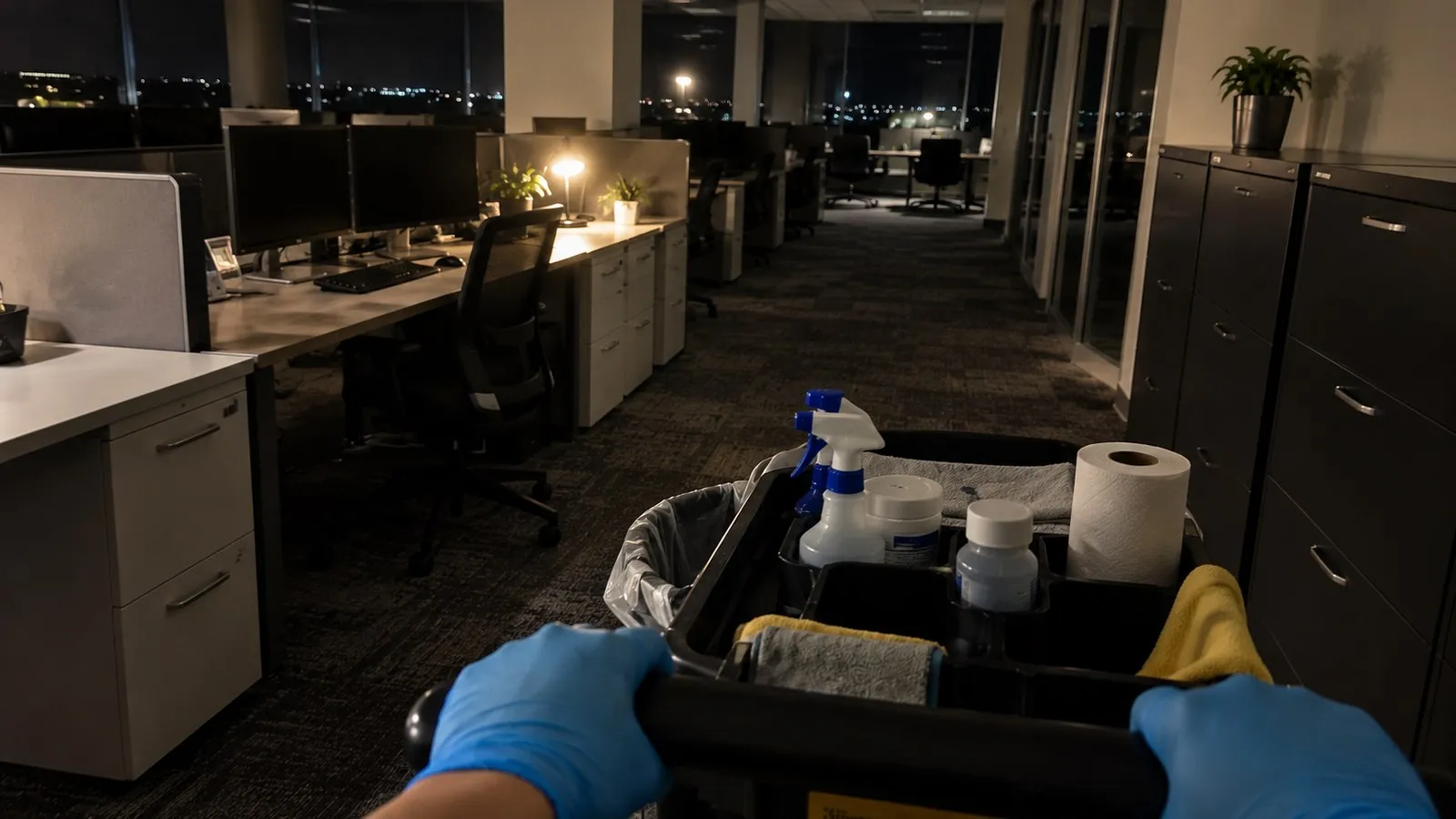
After-hours cleaning means someone has a key or a code to your office when nobody's there. For a lot of owners, that's the real decision, more than price or the checklist. You're giving a stranger access to computers, client files, the petty cash drawer, and whatever's sitting on people's desks. You should know exactly who's coming in.
Every cleaner on our team is background-checked and vetted before they work in anyone's space. You don't need to be there during the visit, so the clean can happen after your staff goes home or before they get in. We're locally owned and operated, serving Frisco and Collin County. When you call, you're talking to the people who run the business, not a call center two states away.
Don't take any company's word for it, ours included. Ask these questions before you hand over a key:
- Is every person who enters background-checked, including fill-ins when the regular cleaner is out sick?
- Will the same cleaner or crew come each time, or will it change from week to week?
- How are keys, fobs, and alarm codes stored, and who can get to them?
- What happens if a key gets lost or a door gets left unlocked?
- Do they carry liability insurance, and can they show you proof?
- Who do you call the next morning if something looks wrong?
Get those answers in an email so you have them later. A company that's set up right won't mind putting it in writing. If they get vague or annoyed, that tells you something.
Your side of the setup matters just as much. A few simple steps protect you no matter who you hire:
- Give the cleaner their own alarm code or key. Many alarm systems and smart locks let you make a separate code you can shut off without changing everyone else's.
- Lock up cash, checks, and sensitive files. Nobody should have to clean around them.
- Mark any rooms that are off-limits, like a server closet or a private office.
- Write down how you want things left: which lights stay on, where the thermostat goes, which doors get locked.
Your alarm system can do some of the checking for you. Most keep a log of when each code was used. Glance at it now and then to make sure the entry and exit times match a normal visit. If the crew is in for twenty minutes when the job should take two hours, you'll want to know that too.
Trust gets built over the first few visits. Walk in the next morning and look around. Is everything where your staff left it? Were the doors locked and the alarm set? If the answer is yes week after week, you can stop worrying about it.
We back our work with a 100% Satisfaction Guarantee. And because there's no contract, you're never stuck with a cleaner you don't feel good about having in your building.
Recognize When an Office Does Not Need Recurring Service
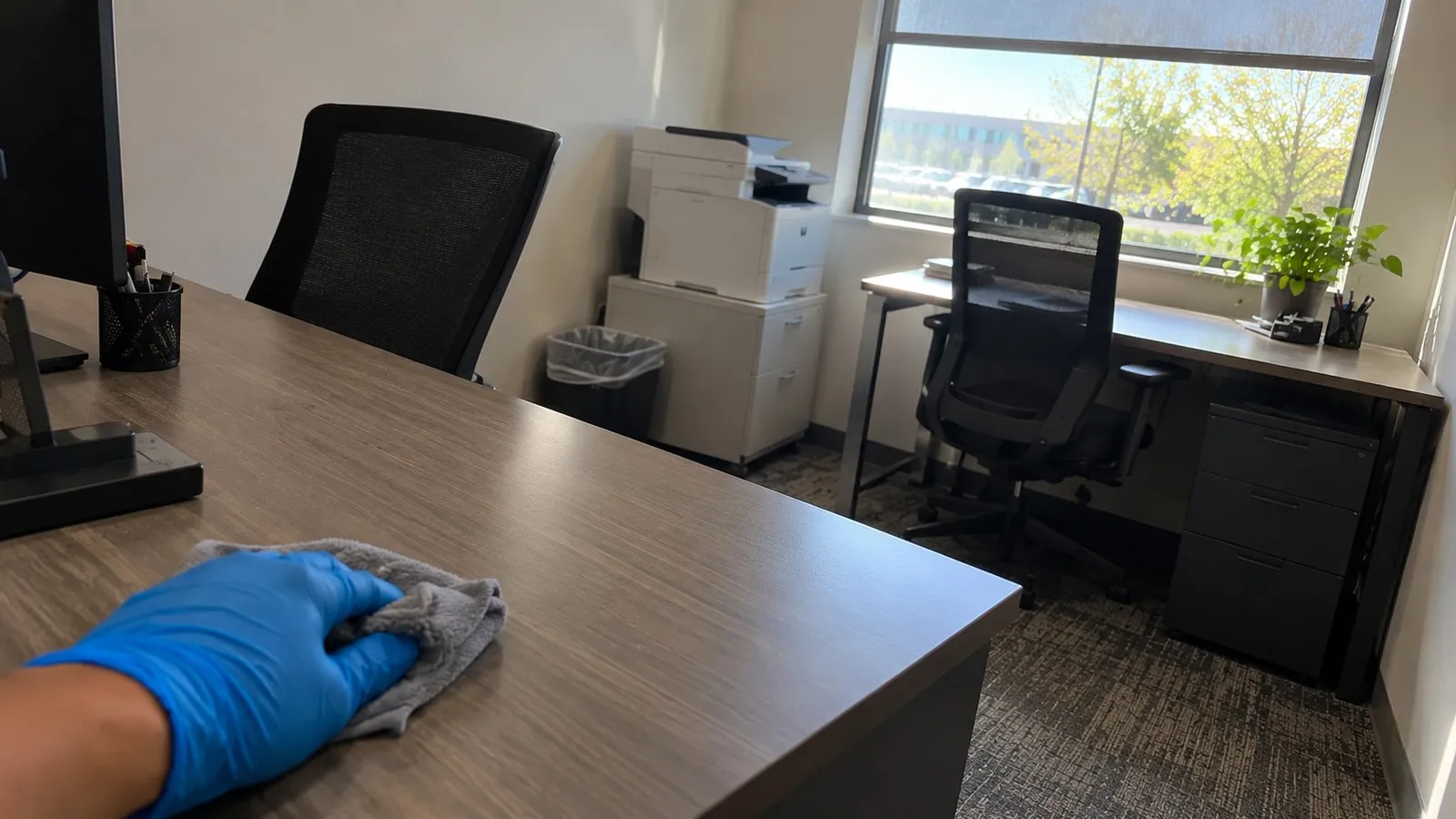
Not every office needs a cleaner on a schedule. Some don't need one at all. If any of the cases below sound like you, save your money or pick a different kind of clean.
Your landlord already covers it. A lot of leased office suites and shared buildings include janitorial service in the rent. That often means trash, restrooms, and common hallways. Before you hire anyone, pull out your lease and read the section on maintenance or common area charges. You may already be paying for a clean you don't know about. If the building's service only covers shared spaces, you might just need someone for your own suite now and then, not a full recurring plan.
You're a one- or two-person office. A small office with one person and one desk doesn't make much of a mess. If you take out the trash, wipe the restroom, and run a vacuum on Friday, you're probably fine. That takes about half an hour a week. Paying someone to do it only makes sense if your time is worth more to you than the cost, or if clients come through and you want the place sharp.
Your team keeps up with it and nobody minds. Some small teams split the chores, and it works. If the restroom stays clean, the break room doesn't get gross, and no one's quietly annoyed about doing all the work, don't fix what isn't broken. The signs that it's stopped working are easy to spot. One person ends up doing everything, or the floors and restroom start slipping because nobody owns them.
You need a one-time job, not a routine. Some situations call for a single clean, not a schedule:
- You're moving into a new space or moving out of an old one. That's a one-time move-in or move-out clean.
- The office hasn't been cleaned in months and has built-up grime or hard water spots in the restroom. Start with a single deep clean, then decide if you want regular visits after.
- You're getting ready for one event, like an open house, an inspection, or a big client visit.
- Only the windows or the lobby chairs look rough. Window cleaning or upholstery cleaning on its own may be all you need.
Your office is closing or downsizing soon. If you're out in two months, don't start a new routine. Get a clean when you leave so you're in good shape for the walkthrough with your landlord.
Here's a simple test. Picture the office on a Thursday afternoon with no cleaner coming. Is the restroom fine? Is the trash under control? Would you be okay if a client walked in right now? If the answer is yes to all three, you don't need recurring service yet. Check again when you add staff, start having visitors, or notice someone grumbling about who cleaned the microwave last.
There's no shame in buying less. The right amount of cleaning is the amount that keeps the space working for the people in it. Anything past that is money you could spend somewhere else.
Related services
- Commercial / disinfecting cleaning
Commercial / Disinfecting Cleaning in Frisco for Occupied Workspaces
- General housekeeping
General Housekeeping in Frisco: Pick the Right Cleaning Frequency
- Interior & exterior window cleaning
Interior & Exterior Window Cleaning in Frisco That Fits Your Home's Routine
- Upholstery cleaning
Upholstery Cleaning in Frisco: Know Your Quote Before You Book
Back to Janitorial service in FriscoBack to House Cleaning Services Pros of Frisco
Frequently Asked Questions
Common questions about Office cleaning
What's included in an office deep clean versus a regular visit?
An office deep clean tackles the buildup that regular visits skip, like baseboards, vents, built-up grime, and hard water spots on restroom fixtures. A recurring visit sticks to the same checklist each time: trash, restrooms, break room, and floors. If your office hasn't been cleaned in months, start with a deep clean first, then move to a regular schedule after.
What do you call the person or company that cleans offices?
They're usually called a commercial cleaner or janitorial service, not a maid service, which is the term for home cleaning. Commercial cleaners handle office-specific work like break rooms, shared restrooms, and high-touch spots such as door handles and elevator buttons. The scope and schedule look different from a home cleaning job, so it helps to ask for a commercial quote, not a residential one.
Is it cheaper to pay an hourly rate or a flat rate for office cleaning?
A flat rate is usually easier to budget because you know the total cost before the crew arrives. Hourly pricing means your bill can shift from visit to visit depending on how long the job takes, which makes it hard to plan ahead. A flat quote based on square footage and bathroom count puts the risk on the cleaner, not on you, if a visit runs long.
Ready to Get Started?
Call (945) 777-3816 now for a free estimate.